Brexit Food Export 2027 Changes: What to Expect
In short
The UK-EU Sanitary and Phytosanitary (SPS) deal would remove most routine veterinary and plant-health border checks and export health certificates on food trade. It is agreed in principle but not in force. Trade press points to a November 2027 rollout, with early 2028 more likely, and customs and origin rules remain.
Key takeaways
- Treat the UK-EU SPS deal as agreed in principle but not in force, and keep every current certificate and check running until official guidance says otherwise.
- Plan your export budget around a rollout that trade press places in November 2027 at the earliest, with Q1 2028 more likely.
- Expect fewer routine veterinary and plant-health checks, but keep customs, origin and data paperwork fully up to date.
- Audit recipes, additives and labels against EU food law now, so you are ready whatever the final rules say.
- Keep meeting foreign buyers throughout the wait, because the manufacturers with buyer relationships in place will benefit first when the paperwork eases.
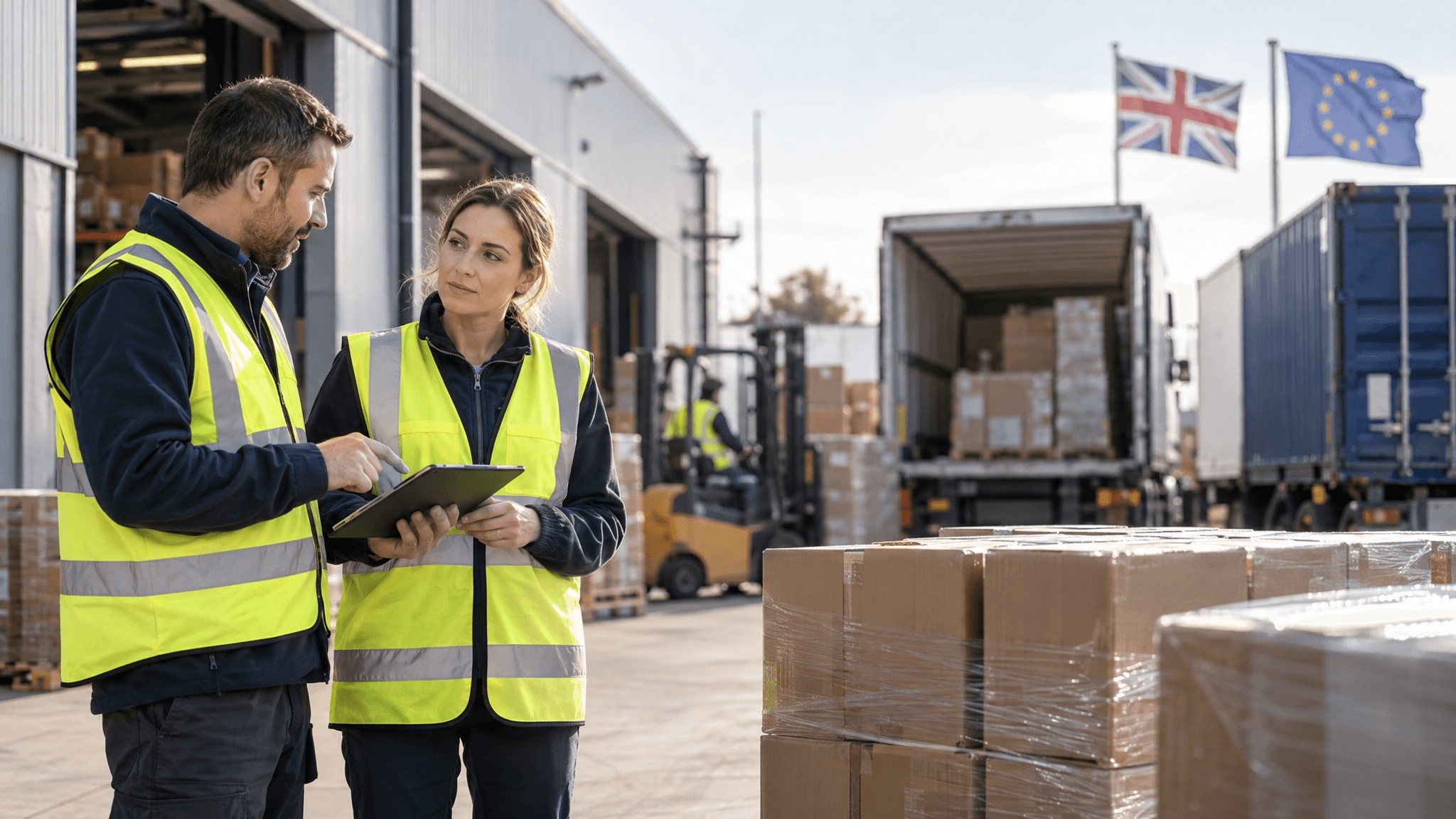
Brexit food export 2027 changes are on every export director's mind, but the honest answer to the question of what changes is: not yet. The UK and EU have agreed in principle a Sanitary and Phytosanitary (SPS) deal that would remove most routine veterinary and plant-health border checks and export health certificates (EHCs) on agri-food trade. It is not in force, and every current check still applies.
The timing is the real problem. The UK government originally aimed for around the middle of the year, yet trade press now reports that the rollout of the new SPS deal is earmarked for November 2027, although it is more likely to be Q1 2028. For a manufacturer with 20-500 employees planning next year's export budget, that gap matters.
This guide explains what the deal would simplify, what stays exactly as it is, and how to keep winning foreign buyers while the paperwork is unresolved.
What the UK-EU SPS Agreement Actually Is
The SPS agreement is a deal on food safety, animal health and plant health rules. Its purpose is to stop treating food moving between the UK and the EU as if it came from a distant third country. If it works as drafted, most routine veterinary and plant-health checks at the border would disappear, along with many of the certificates that go with them.
It is important to be clear about what it is not. It is not a return to the single market, and it is not a customs agreement. Customs controls stay unchanged, so you will still deal with declarations, rules of origin and fiscal requirements.
The benefit is usually framed in economic terms. The agreement is aimed to simplify food trade, cutting red tape and potentially adding billions annually to the UK economy. That is a national estimate, not a promise to any single factory, so use it as context rather than as a forecast for your own margins.
Brexit Food Export 2027 Changes: A Timeline You Can Plan Around
The most useful thing you can do with a draft deal is plan for several outcomes. The government's stated intent was an earlier start, and trade press now points to a later one.
Here is what you can state with confidence:
- The deal is agreed in principle, not in force.
- All current arrangements remain in place until further notice.
- The rollout is earmarked for November 2027, although Q1 2028 is more likely.
- Expect the detail, including any transition period, to be confirmed later.
One date is already fixed and relevant to fruit and vegetable suppliers: checks on medium-risk EU fruit and vegetables coming into the UK remain suspended until 31 January 2027. That is a short-term easing, not part of the new deal, so do not read it as a signal for other product categories.
💡 Key Insight: A budget built on a single start date is fragile. Build two versions, one where the paperwork eases early and one where it does not, and make sure neither version depends on the deal arriving on time.
What Gets Simpler for Food and Beverage Exporters
The current burden is heavy. UK exports of dairy, fish, eggs and red meat to the EU face 100% document checks and up to 30% physical checks, and the effect on trade has been visible. UK exports of food and agricultural goods to the EU have fallen by 22% since 2018.
The table below pulls together the verified figures and what each means for a manufacturer.
| Figure | What it means for a manufacturer | Source |
|---|---|---|
| UK exports of dairy, fish, eggs and red meat to the EU face 100% document checks and up to 30% physical checks | Animal-origin products carry the heaviest checking burden today, so they stand to gain most from the deal | Kelmer |
| UK exports of food and agricultural goods to the EU have fallen by 22% since 2018 | Friction has cost real volume, and buyers who dropped UK suppliers may be open to returning | Kelmer |
| The agreement is aimed to simplify food trade, cutting red tape and potentially adding a large annual boost to the UK economy | A national estimate that shows the scale of the political intent, not a figure for your company | Ingredients Network |
In our view, the practical gain for most manufacturers will be fewer certificates and fewer routine checks on each shipment, although the detail is still being finalised.
Imagine a Polish dairy producer that today builds an EHC and a documentary check into every UK shipment. If the deal works as drafted, that step would shrink, which would cut both cost and delivery time for the buyer's category manager. That is a stronger argument in a negotiation than any discount.
📊 UK exports of food and agricultural goods to the EU have fallen by 22% since 2018 which means buyers have already been sourcing elsewhere for years, so the first manufacturers back in front of them will be remembered. (Source: Kelmer)
What Does Not Change
This is where many exporters misread the headlines. Easier veterinary checks do not mean easy trade.
| Area | After the SPS deal |
|---|---|
| Customs declarations | Unchanged |
| Rules of origin | Still apply |
| Fiscal and data requirements | Still apply |
| Imports from outside the EU | Review your exposure with your forwarder |
| Current checks | Remain until the deal is in force |
The last two points deserve attention. If you ship ingredients or finished goods from outside the EU into your production chain, review that exposure now, because rules for non-EU trade may not ease in the same way.
For a Polish or CEE manufacturer already inside the EU, the direction of travel is favourable, but customs paperwork remains the part of the process that needs your attention. Our guide on exporting to the UK after Brexit covers that side in detail.
Alignment with EU Law: Check Recipes and Labels Now
In our view, the less publicised part of the deal is likely to be closer alignment with EU food law. The final details are still to be confirmed, so treat this as a reason to check your products rather than as a settled rule.
For an EU manufacturer this is mostly good news, because one rulebook is cheaper than two. Still, it is worth checking three things:
- Recipes and additives: confirm every additive, enzyme and flavouring is authorised under EU law.
- Labels: check that wording, allergen declarations and origin statements match EU requirements. Our article on food labelling compliance for export is a useful checklist.
- Certifications: keep BRC or IFS audits current, because UK retailers will keep asking for them. See BRC and IFS requirements for the UK and DACH.
⚡ Pro Tip: Put your BRC or IFS certificate number and a one-page summary of your allergen and additive controls in the first email to a UK category buyer. It answers their compliance question before they ask it.
How to Prepare While the Rules Are Still Unsettled
Waiting for the deal is a strategy that costs money. Here is a practical sequence for the next few months:
- Keep current compliance running. Continue EHC and BTOM processes exactly as now. All current arrangements remain in place until further notice.
- Audit your products. List every SKU by animal-origin, plant-origin or processed, so you know which ones gain most from fewer checks.
- Map your UK and EU buyers. Decide which import managers, purchasing directors and distributor owners you want to meet first.
- Prepare a short compliance pack. Certifications, labels, shelf life and delivery times in one document.
- Review your logistics. Ask your forwarder what would change in practice and what would not.
- Set a review date. Revisit the plan when official guidance on the start date and any transition period is published.
Our view, shared by Casper Morawski, founder of ProspectX, is that the manufacturers who benefit first from a rule change are those who already have buyers in conversation. Paperwork gets simpler for everyone at the same moment, but only the supplier with an established relationship can use that moment immediately.
At ProspectX, we've seen this firsthand. When we arrange buyer meetings for manufacturers, import managers and category buyers ask about delivery reliability and paperwork early in the conversation. A supplier that can answer clearly about certificates, labels and timing moves faster than one that cannot.
Trade fairs are one way to build those conversations, and they remain valuable. They are also tied to a calendar, while buyer decisions are not. Our guide on finding food and beverage buyers in the UK and Germany covers a year-round approach, and our overview of UK and EU export compliance for CEE manufacturers covers the rules in more depth.
Frequently Asked Questions
Is the UK-EU SPS agreement already in force?
No, the UK-EU SPS agreement is agreed in principle but not yet in force. All current checks and certificates still apply. Trade press reports that the rollout is earmarked for November 2027, although Q1 2028 is more likely.
Will the SPS deal remove all checks on food exports to the UK and EU?
No, the deal would remove most routine veterinary and plant-health border checks and export health certificates, not every check. Customs controls remain unchanged because the SPS agreement is not a customs agreement. You will still face customs, origin, fiscal and data requirements.
Do I still need export health certificates today?
Yes, you should keep your current EHC and BTOM compliance running. All current arrangements remain in place until further notice, so preparing for the new deal should not mean dropping any existing process.
Which food products benefit most from the deal?
Products of animal origin are likely to benefit most, because UK exports of dairy, fish, eggs and red meat to the EU currently face 100% document checks and up to 30% physical checks. Those categories carry the heaviest checking burden today, so any easing would matter most to them.
Should I wait for the deal before looking for new buyers?
No, you should not wait for the deal before looking for new buyers, because the rollout date is still uncertain. UK exports of food and agricultural goods to the EU have fallen by 22% since 2018, so buyers have been changing suppliers for years. Building relationships now means you are ready when the paperwork eases.
Conclusion
The Brexit food export 2027 changes are real but not yet in force, and the dates are still moving. The deal would cut routine veterinary and plant-health checks and many certificates, while customs, origin and data requirements stay. Keep current compliance running, audit your recipes and labels against EU law, and plan for a later start rather than an earlier one.
If you're a manufacturer looking to find foreign buyers without relying on trade fairs, ProspectX can help. We deliver ready-made meetings with import managers, purchasing directors, and distributors in your target markets. Our pilot guarantees a minimum of 10 qualified meetings within 8-12 weeks. The pilot runs for a fixed fee, a fraction of what a 15,000+ EUR trade fair stand costs. Book a free first call to discuss your export goals.
Part of the Export Market Entry guide.