Digital Channels for EU Food Exports: SEO & PPC
In short
How European food manufacturers are using digital channels to reach international buyers in 2026. Expert insights on technical SEO and PPC strategies for export success.
Ask your AI about this guide:ChatGPTClaudePerplexity
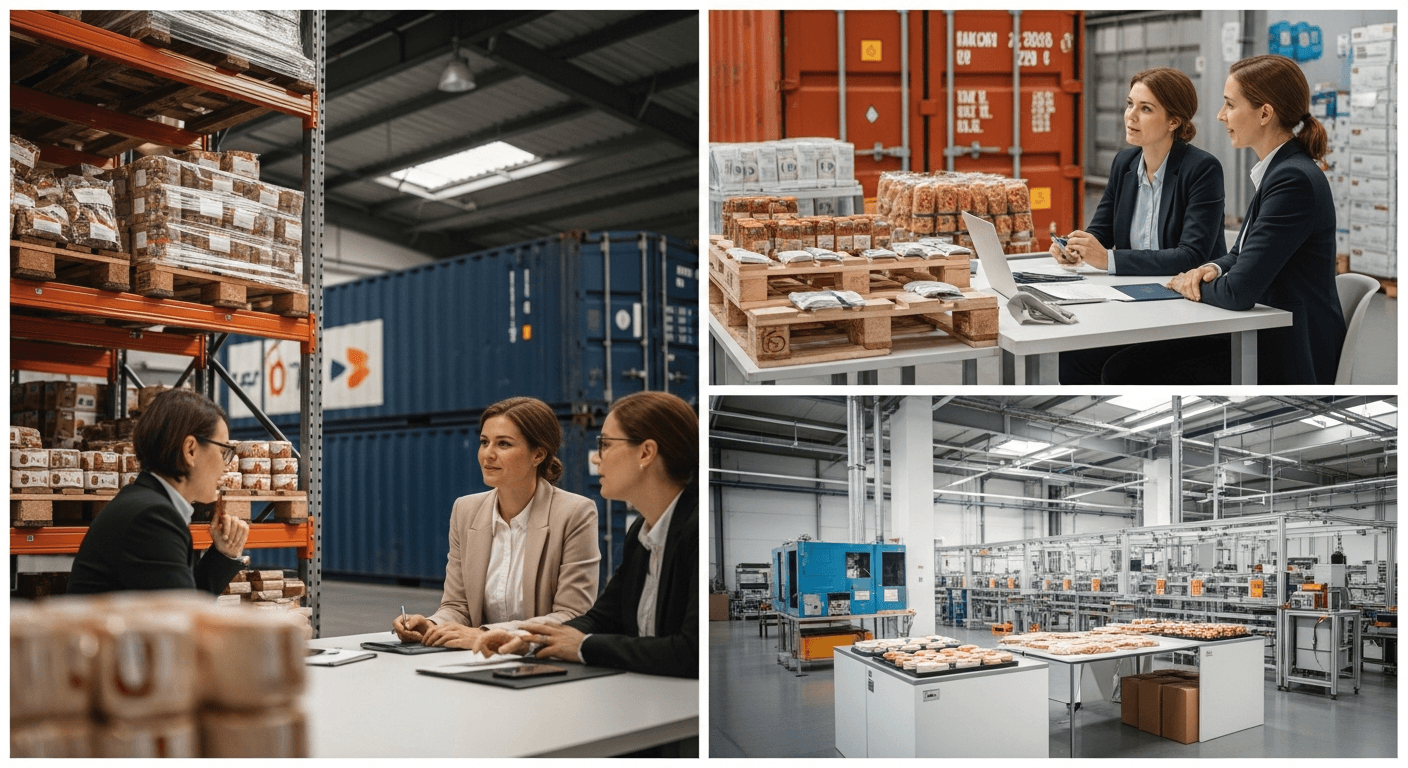
Digital Channels Driving EU Exports: Technical SEO and PPC for Food Producers in 2026
Technical SEO and targeted PPC let food producers reach European buyers year-round for €3,000-5,000 — versus €15,000-25,000 for a three-day trade fair — because import managers and purchasing directors now research suppliers online before any event. While your competitors queue for expensive trade fair booths, smart food manufacturers are already booking meetings with German purchasing directors and Nordic import managers through digital channels. The landscape has shifted dramatically - European B2B procurement is increasingly moving online, and digital channels are becoming the primary driver of EU exports for food producers.
This isn't about replacing your trade fair strategy entirely. It's about complementing those three expensive days in Düsseldorf with year-round digital presence that works while you sleep. For manufacturers expanding from Poland into DACH markets or from Czech Republic into Nordics, understanding how digital channels drive EU exports in 2026 could mean the difference between costly booth visits and profitable distributor partnerships.
The Digital Transformation of European Food Procurement
European food procurement has undergone a fundamental shift. Import managers at major retail chains and wholesale distributors now conduct initial supplier research online before they ever set foot on a trade fair floor.
📊 The B2B food sector is undergoing significant digital transformation with purchasing directors increasingly using online platforms for supplier discovery
This transformation affects every stage of the procurement process. A category manager at a German retail chain might research 20 potential suppliers online before selecting five for deeper conversations. If your Polish bakery or Czech confectionery company isn't visible in those initial searches, you've lost the opportunity before it began.
The shift is particularly pronounced in DACH and Nordic markets, where digitalisation of business processes runs ahead of other European regions. Swedish import managers expect detailed product information, certifications, and technical specifications available online. They want to evaluate your manufacturing capabilities, sustainability credentials, and export experience before picking up the phone.
Online Procurement Platforms Reshape B2B Food Trade
Traditional relationship-building still matters, but the initial discovery phase has moved online. Online procurement platforms and marketplaces are gaining traction across Europe, fundamentally changing how distributors find new suppliers.
This creates both opportunity and challenge for Central European manufacturers. The opportunity: you can reach purchasing directors in Hamburg or Stockholm through digital buyer acquisition without travelling. The challenge: you're competing with suppliers who understand how to optimise their digital presence for international buyers.
Technical SEO: Making Your Manufacturing Expertise Discoverable
When a Dutch import manager searches "organic snack supplier Central Europe" or "BRC certified bakery Poland", your website needs to appear in those results. Technical SEO for manufacturing differs significantly from typical e-commerce optimisation.
Manufacturing-Specific SEO Fundamentals
Your technical SEO strategy must reflect how B2B buyers search for suppliers. They use specific terminology: certification numbers, production capacity figures, and technical specifications. A purchasing director searching for suppliers doesn't type "best cookies" - they search "private label biscuit manufacturer 10000 units minimum order BRC".
💡 Key Insight: B2B buyers search using technical terms and specifications, not consumer-friendly language. Your SEO strategy must reflect this reality.
Structured data becomes crucial for manufacturing websites. Search engines need to understand your production capabilities, certifications, and export experience. This means implementing schema markup for:
- Manufacturing processes and capabilities
- Quality certifications (BRC, IFS, HACCP)
- Production capacity and minimum order quantities
- Export markets and experience
- Technical specifications and ingredients
Site Architecture for International B2B Buyers
Your website architecture should mirror how international buyers evaluate suppliers. They follow a predictable research pattern: company overview, production capabilities, quality certifications, export experience, and contact information.
Create dedicated pages for each target market. A German purchasing director has different concerns than a Nordic import manager. Your DACH market page should emphasise certifications and technical compliance. Your Nordic page might focus on sustainability and transparency.
⚡ Pro Tip: Create market-specific landing pages that address local procurement requirements. German buyers care about different certifications than Swedish buyers.
PPC Strategies That Connect with European Purchasing Directors
Pay-per-click advertising for B2B manufacturing requires a completely different approach than consumer marketing. You're not trying to reach thousands of consumers - you want to connect with dozens of qualified purchasing directors and import managers.
Account Structure for Manufacturing PPC
Structure your campaigns around buyer intent, not product categories. Create separate campaigns for:
- Research phase: "food supplier Central Europe", "private label manufacturer"
- Evaluation phase: "BRC certified bakery Poland", "organic snack producer Czech Republic"
- Decision phase: "minimum order 5000 units", "export experience UK market"
This approach aligns with how B2B buyers actually search. A category manager at a UK retail chain might start with broad research terms, then narrow down to specific requirements as they evaluate options.
Keyword Strategy for B2B Food Manufacturing
B2B manufacturing keywords have completely different characteristics than consumer keywords. Search volumes are lower, but intent is much higher. The purchasing director searching "private label confectionery manufacturer Central Europe minimum order 10000" is much closer to making a decision than someone searching "best chocolate".
📊 Digital marketing strategies including targeted PPC are essential for food manufacturers to enhance visibility and reach international B2B buyers
Focus on long-tail keywords that include:
- Geographic qualifiers ("Central Europe", "Poland", "Czech Republic")
- Technical specifications ("BRC certified", "organic", "gluten-free")
- Business terms ("private label", "minimum order", "export experience")
- Buyer job titles ("purchasing director", "import manager", "category buyer")
Landing Page Optimisation for Manufacturing
Your PPC landing pages must immediately demonstrate manufacturing credibility. B2B buyers evaluate suppliers differently than consumers evaluate products. They want proof of capability, not persuasive copy.
Include above-the-fold:
- Production capacity figures
- Key certifications with logos
- Years of export experience
- Major markets served
- Contact information for export manager
Digital Channels vs Traditional Trade Fair Approach
The economics of digital channels versus trade fairs become compelling when you examine the numbers. A typical food trade fair costs 15,000-25,000 EUR for three days, including booth rental, travel, accommodation, and staff time.
| Approach | Cost | Duration | Reach | Qualified Meetings |
|---|---|---|---|---|
| Trade Fair | €15,000-25,000 | 3 days | 200-300 contacts | 5-10 qualified |
| Digital Channels | €3,000-5,000 | Year-round | Unlimited | 20-40 per quarter |
| ProspectX | Fixed fee | 8-12 weeks | Targeted | 10 guaranteed |
Digital channels don't replace trade fairs entirely, but they provide continuous market presence between events. Your website works while you're sleeping, your paid search reaches buyers researching suppliers at midnight, and your SEO efforts compound over time.
💡 Key Insight: Digital channels provide year-round market presence at a fraction of trade fair costs, but work best as a complement to, not replacement for, face-to-face relationship building.
Market Entry Through Digital Channels: DACH and Nordic Focus
Entering DACH and Nordic markets through digital channels requires understanding local buyer behaviour and procurement processes. German purchasing directors research suppliers thoroughly before making contact. They expect detailed technical information, compliance documentation, and clear manufacturing specifications.
Nordic buyers prioritise sustainability and transparency. Your digital presence must demonstrate environmental responsibility, ethical sourcing, and sustainable manufacturing practices. A Finnish import manager evaluating suppliers will research your sustainability credentials online before considering your products.
DACH Market Digital Strategy
German-speaking markets reward thoroughness and technical precision. Your website content must be detailed, accurate, and professionally presented. German purchasing directors expect:
- Detailed technical specifications
- Complete certification documentation
- Clear production process descriptions
- Precise delivery and logistics information
- Professional German-language content (not machine translated)
Nordic Market Approach
Nordic markets emphasise sustainability, innovation, and transparency. Your digital presence should highlight:
- Environmental impact and sustainability initiatives
- Innovation in products or processes
- Transparency in sourcing and manufacturing
- Social responsibility credentials
- Clean, minimalist website design reflecting Nordic aesthetic preferences
Measuring Digital Channel Success in B2B Manufacturing
Measuring digital channel success for manufacturing exports requires different metrics than consumer marketing. You're not optimising for traffic volume or social media engagement. Success means connecting with qualified buyers who can place substantial orders.
Key Performance Indicators for Manufacturing Digital Channels
Primary KPIs:
- Qualified enquiries from target markets
- Meetings booked with purchasing directors/import managers
- Export enquiry value (average potential order size)
- Time from enquiry to first order
- Geographic distribution of enquiries
Secondary KPIs:
- Organic search visibility for manufacturing terms
- Website engagement from target markets
- PPC cost per qualified enquiry
- Email open rates for export communications
- Download rates for technical specifications/catalogues
📊 The European Union actively supports digital transformation in the food export sector, making digital channels increasingly important for EU manufacturers
Attribution and ROI Calculation
B2B manufacturing sales cycles are longer than consumer purchases. A purchasing director might research suppliers for months before making contact, then take additional months to place the first order. Your attribution model must account for these extended timelines.
Implement multi-touch attribution that tracks:
- Initial digital touchpoint (organic search, PPC ad, referral)
- Content engagement (technical specifications downloaded, videos watched)
- Direct engagement (contact form, phone call, email enquiry)
- Meeting progression (initial call, facility visit, sample request)
- Order conversion (first order, repeat orders, contract value)
Integration with Traditional Export Development
Digital channels work best when integrated with traditional export development activities. Your trade fair presence becomes more effective when visitors can research your company online beforehand. Your export manager's cold emails work better when prospects can verify your credentials through a professional digital presence.
Digital-Physical Channel Integration
Create seamless connections between digital and physical touchpoints:
- Pre-trade fair: Use digital channels to book meetings before the event
- During trade fair: Collect contacts for digital follow-up
- Post-trade fair: Nurture relationships through targeted digital content
- Between events: Maintain visibility through continuous digital presence
This integrated approach maximises the value of your trade fair investment while building year-round market presence through digital channels.
Key Takeaways
- Digital channels are becoming the primary driver of EU exports for food manufacturers, with B2B procurement increasingly moving online across European markets
- Technical SEO for manufacturing requires focusing on buyer-specific terminology, certifications, and production capabilities rather than consumer-friendly language
- PPC strategies must target purchasing directors and import managers using long-tail keywords that include technical specifications and geographic qualifiers
- DACH markets prioritise technical precision and detailed documentation, while Nordic markets emphasise sustainability and transparency in digital content
- Digital channels provide year-round market presence at a fraction of trade fair costs, working best as a complement to traditional export development activities
- Success measurement focuses on qualified enquiries and meetings with decision-makers rather than website traffic or social media engagement
- Integration between digital and physical channels maximises trade fair ROI while building continuous market presence between events
Conclusion
Digital channels driving EU exports in 2026 represent a fundamental shift in how European food manufacturers connect with international buyers. The transformation from booth-dependent relationships to digital-first discovery creates opportunities for manufacturers willing to invest in professional online presence and targeted digital marketing.
The most successful exporters will combine digital efficiency with relationship-building excellence. Your website becomes your 24/7 export representative, your SEO efforts compound over months and years, and your paid search connects you with qualified buyers actively seeking suppliers.
For manufacturers expanding from Central Europe into DACH, Nordic, or Benelux markets, digital channels offer a cost-effective path to consistent buyer engagement. The question isn't whether to embrace digital channels for EU exports, but how quickly you can implement strategies that connect with purchasing directors and import managers in your target markets.
If you're a manufacturer looking to find foreign buyers without spending 15,000 EUR on trade fairs, ProspectX can help. We deliver ready-made meetings with import managers, purchasing directors, and distributors in your target markets. Book a call to discuss your export goals and discover how digital channels can drive your EU export success in 2026.