Trade Fair Alternatives for Manufacturers 2026
In short
Discover proven trade fair alternatives that help manufacturers find foreign buyers for a fraction of exhibition costs. Save £13,000+ while getting year-round results.
Ask your AI about this guide:ChatGPTClaudePerplexity
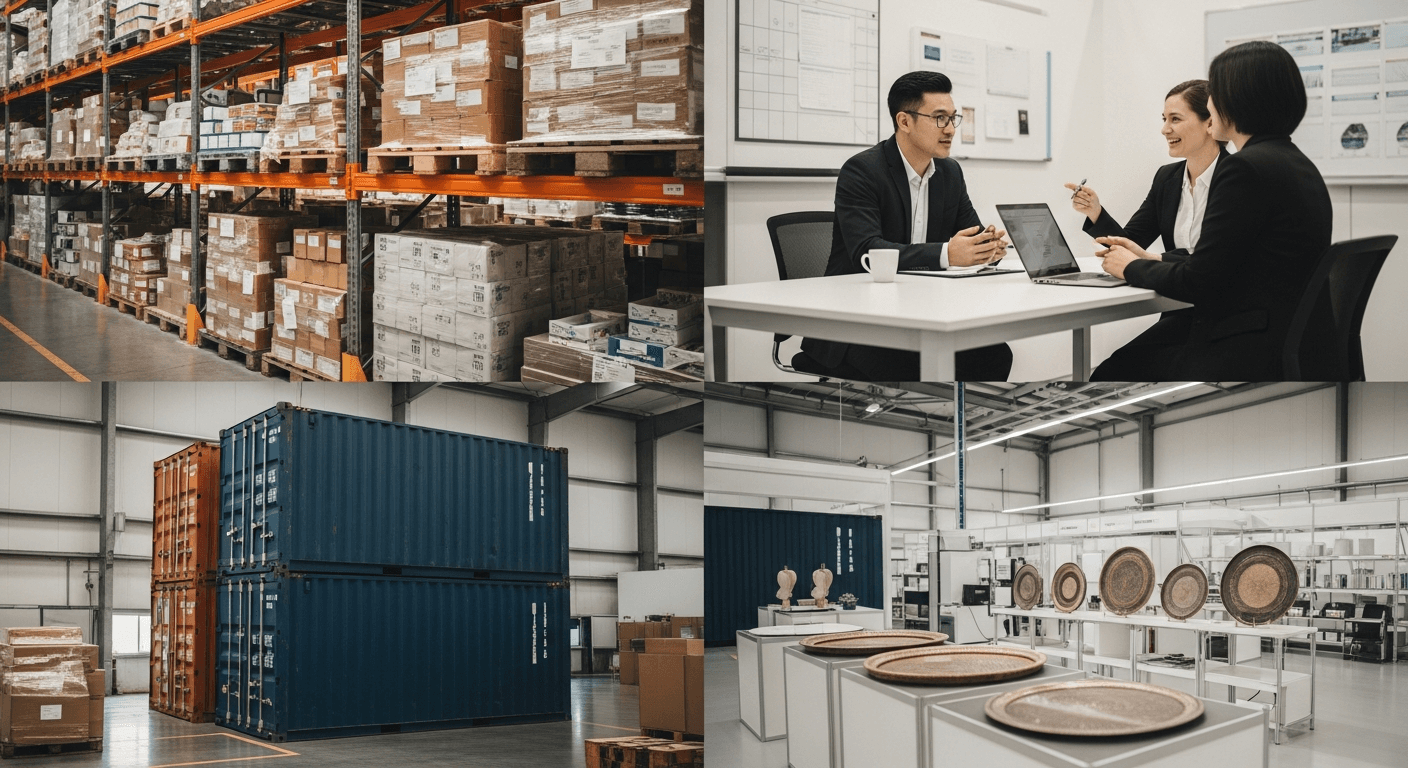
Beyond the Booth: Cost-Effective Trade Fair Alternatives for Manufacturers in 2026
The most cost-effective trade fair alternatives for manufacturers in 2026 are contacting purchasing directors and import managers directly, digital marketing (LinkedIn and SEO), virtual trade shows, and distributor partnerships — delivering meetings at €130–500 each versus €1,750–2,300 per meeting from a major exhibition. A single 3-day trade fair now costs manufacturers £15,000+ once booth rental, travel, accommodation, and staff time are counted, yet many manufacturers report declining ROI as competition intensifies and buyer behaviour shifts.
For manufacturers with 20-500 employees looking to expand into UK, DACH, Nordic, and Benelux markets, the question isn't whether to abandon trade fairs entirely - it's how to complement them with cost-effective alternatives that deliver year-round results. This guide explores proven trade fair alternatives that help manufacturers connect with import managers, purchasing directors, and distributors without breaking the bank.
The Rising Cost Crisis of Trade Fair Participation
Traditional trade fairs are pricing out mid-sized manufacturers. Beyond the obvious booth costs, hidden expenses quickly accumulate: premium location fees, electrical connections, Wi-Fi charges, and mandatory contractor services.
📊 Exhibition costs have increased by 40% over the past five years, while buyer attendance remains flat (Source: Exhibit City News)
Consider a Polish food manufacturer attending Anuga in Germany. The total investment typically includes:
- Booth space (18 sqm): €8,500
- Stand construction: €12,000
- Travel and accommodation (3 staff, 4 days): €4,200
- Samples and marketing materials: €2,800
- Total: €27,500 for 3 days
Meanwhile, purchasing directors increasingly prefer pre-scheduled meetings over booth visits. They want detailed product information, certifications, and pricing before committing time to face-to-face discussions.
The Shift in Buyer Behaviour
Digital transformation has fundamentally changed how European buyers source suppliers. Category managers at major retail chains now conduct initial supplier research online, requesting samples and documentation before arranging meetings.
This presents opportunities for manufacturers willing to adapt their export strategies beyond traditional trade fair participation.
Direct Contact: The Most Cost-Effective Alternative
Contacting purchasing directors and import managers directly delivers higher ROI than booth-based marketing. Instead of hoping buyers visit your stand, you proactively contact decision-makers in your chosen markets.
Building Your Buyer Database
Successful direct contact starts with identifying the right people. For a Czech cosmetics manufacturer selling to UK retailers, this means:
- Category managers at Boots, Superdrug, and independent pharmacy chains
- Purchasing directors at health and beauty distributors
- Import managers at cash-and-carry wholesalers
- Buyers at online beauty retailers
⚡ Pro Tip: When contacting German purchasing directors, always include your BRC/IFS certification number in the first email. German buyers prioritise food safety credentials above all else.
Crafting Compelling First Messages
Your initial contact must immediately demonstrate value. Generic "we are a manufacturer" emails get deleted. Instead, lead with specific benefits:
Subject: New BRC-certified supplier - 40% cost savings on organic snack bars
"Good morning Sarah,
I noticed Tesco recently expanded its organic snacking range. We're a Polish manufacturer supplying similar products to Rewe and Carrefour across Europe.
Our organic fruit bars offer 40% better margins than your current suppliers, with full BRC certification and 12-month shelf life. Would you be interested in samples and a brief call next week?"
This approach works because it:
- References specific retailer initiatives
- Provides concrete financial benefits
- Mentions relevant certifications
- Includes a soft call-to-action
Digital Marketing Strategies for Export Growth
Digitalization significantly improves export performance for European manufacturers. Digital channels offer year-round visibility at a fraction of trade fair costs.
LinkedIn for B2B Export Success
LinkedIn remains the most effective platform for reaching European buyers. However, success requires strategic content marketing, not just connection requests.
Content Strategy for Manufacturers:
- Product innovation posts - showcase new certifications, flavours, or packaging
- Behind-the-scenes content - factory tours, quality control processes
- Market insights - trends you're seeing across different European markets
- Customer success stories - how your products perform in retail environments
💡 Key Insight: Purchasing directors are 3x more likely to respond to manufacturers who regularly share industry insights versus those who only post product promotions.
SEO for Export Markets
Buyers research suppliers online before making contact. Your website must rank for relevant search terms in target markets:
- "BRC certified food manufacturer Poland"
- "Private label cosmetics supplier Europe"
- "Organic snack manufacturer export"
Create market-specific landing pages addressing local requirements. A page targeting German buyers should emphasise HACCP compliance, delivery reliability, and existing relationships with German retailers.
Virtual Trade Shows and Online Marketplaces
Virtual exhibitions gained traction during COVID-19 and continue offering value for budget-conscious manufacturers. While they lack face-to-face interaction, costs are significantly lower.
Choosing the Right Virtual Platforms
| Platform Type | Cost Range | Best For | Key Benefits |
|---|---|---|---|
| Industry Virtual Fairs | €2,000-5,000 | Established manufacturers | Lower cost, global reach |
| B2B Marketplaces | €500-2,000/year | New exporters | Always-on presence |
| Webinar Series | €1,000-3,000 | Technical products | Educational positioning |
The global virtual events market is expected to grow significantly, making them increasingly viable alternatives to physical exhibitions.
Maximising Virtual Event ROI
Virtual trade fairs require different strategies than physical events:
- Pre-event marketing - Email registered attendees before the event
- Interactive demonstrations - Live product showcases with Q&A sessions
- Follow-up automation - Immediate sample requests and meeting scheduling
- Content libraries - Downloadable specifications, certifications, case studies
Success metrics differ too. Instead of booth visitors, track video engagement, document downloads, and meeting requests.
Regional Market Entry Strategies
Each target market requires tailored approaches. What works for UK buyers may not resonate with German purchasing directors.
UK Market Approach
Key Characteristics:
- Relationship-focused buying decisions
- Strong emphasis on sustainability credentials
- Preference for email communication
- Faster decision-making processes
Effective Strategies:
- Highlight environmental certifications (Rainforest Alliance, Fairtrade)
- Emphasise Brexit-related supply chain advantages
- Use case studies from existing UK customers
- Offer flexible minimum order quantities
DACH Market Penetration
Key Characteristics:
- Extremely quality-focused
- Detailed technical documentation required
- Longer relationship-building periods
- Premium pricing acceptance for quality
Effective Strategies:
- Lead with certifications (IFS, BRC, organic)
- Provide comprehensive technical specifications
- Arrange factory visits for serious prospects
- Partner with local distributors for market credibility
📊 German buyers spend 60% longer evaluating suppliers compared to UK buyers (Source: McKinsey European B2B Study)
Nordic Market Considerations
Nordic buyers prioritise sustainability and innovation. They're willing to pay premiums for products that align with environmental values.
Winning Approaches:
- Emphasise circular economy principles
- Highlight reduced packaging or renewable materials
- Demonstrate social responsibility initiatives
- Provide carbon footprint calculations
Partnership and Distribution Models
Direct sales aren't always optimal. Strategic partnerships can accelerate market entry while reducing costs.
Types of Export Partnerships
Exclusive Distributors:
- Best for: Complex products requiring local support
- Investment: Low upfront, revenue sharing
- Timeline: 6-12 months to establish
Import Agents:
- Best for: Simple products with established demand
- Investment: Commission-based, typically 5-15%
- Timeline: 3-6 months to first orders
Retail Direct Programs:
- Best for: Unique products with strong margins
- Investment: Higher marketing support required
- Timeline: 12-18 months for major chains
Finding the Right Partners
Successful partnerships start with thorough partner research. Look for distributors with:
- Complementary (not competing) product portfolios
- Established relationships with your target customers
- Financial stability and growth trajectory
- Geographic coverage matching your expansion plans
⚡ Pro Tip: Always request customer references from potential distributors. A distributor claiming to work with major retailers should easily provide contact details for verification.
Cost Comparison: Trade Fairs vs Alternatives
The financial case for trade fair alternatives becomes clear when comparing total costs and annual impact:
| Approach | Annual Investment | Meetings Generated | Cost per Meeting |
|---|---|---|---|
| Major Trade Fair (2 per year) | €35,000 | 15-20 | €1,750-2,300 |
| Direct Buyer Contact Programme | €8,000 | 40-60 | €130-200 |
| Digital Marketing + Virtual Events | €12,000 | 30-45 | €270-400 |
| Partnership Development | €5,000 | 10-15 | €330-500 |
These numbers assume a manufacturer with €10-50M annual revenue targeting 2-3 European markets.
Hidden Trade Fair Costs
Traditional cost calculations often miss significant expenses:
- Opportunity cost - Senior staff away from daily operations
- Follow-up resources - Processing contacts and samples post-event
- Inventory costs - Samples, brochures, and display products
- Relationship maintenance - Ongoing communication with trade fair contacts
When factoring these hidden costs, trade fair alternatives become even more attractive.
Technology Solutions for Export Growth
European SMEs that embrace digital technologies show stronger export performance. Modern CRM systems, email automation, and analytics tools level the playing field for mid-sized manufacturers.
Essential Export Technology Stack
Customer Relationship Management:
- Track buyer interactions across multiple touchpoints
- Automate follow-up sequences for different buyer types
- Manage sample requests and meeting scheduling
- Monitor deal progression and forecast revenue
Email Marketing Automation:
- Segment buyers by market, product interest, and buying stage
- Deliver relevant content based on buyer behaviour
- Track engagement and optimise messaging
- Integrate with CRM for complete buyer journey visibility
Analytics and Reporting:
- Monitor website traffic from target markets
- Track email performance by geography
- Measure conversion rates from inquiry to order
- Calculate customer acquisition costs by channel
💡 Key Insight: Manufacturers using integrated CRM and marketing automation see 45% higher response rates from international buyers compared to those using spreadsheets and manual processes.
Building Long-Term Export Success
Trade fair alternatives work best as part of integrated export strategies, not one-off pushes. Sustainable export growth requires consistent buyer engagement throughout the year.
Creating Year-Round Buyer Engagement
Quarterly Market Updates: Share relevant industry insights, regulatory changes, and market trends with your buyer database. Position your company as a knowledgeable partner, not just a supplier.
Seasonal Product Showcases: Time product launches and promotions with retail buying cycles. Christmas products should be presented in January, summer lines in September.
Educational Content Series: Create valuable resources addressing common buyer challenges: shelf-life optimisation, packaging sustainability, consumer trend analysis.
Measuring Success Beyond Sales
Export success metrics should include leading indicators, not just revenue:
- Response rates to the messages you send buyers
- Meeting-to-sample conversion rates
- Sample-to-trial progression
- Trial-to-listing success rates
- Customer lifetime value by acquisition channel
These metrics help optimise your approach and justify continued investment in trade fair alternatives.
Key Takeaways
- Trade fair costs have increased 40% in five years while delivering flat buyer attendance, making alternatives essential for cost-conscious manufacturers
- Contacting purchasing directors and import managers directly delivers higher ROI than booth-based marketing at major exhibitions
- Digital marketing strategies, particularly LinkedIn content and SEO, provide year-round visibility at a fraction of trade fair costs
- Virtual trade shows and online marketplaces offer global reach for €2,000-5,000 versus €25,000+ for physical exhibitions
- Each target market (UK, DACH, Nordics, Benelux) requires tailored approaches based on local buyer preferences and decision-making processes
- Strategic partnerships with distributors and import agents can accelerate market entry while reducing upfront investment
- Technology solutions including CRM systems and marketing automation increase international buyer response rates by 45% compared to manual processes
Conclusion
The era of relying solely on expensive trade fairs for export growth is ending. Smart manufacturers are embracing cost-effective alternatives that deliver better results at lower costs. Whether through direct contact, digital marketing, virtual events, or strategic partnerships, multiple pathways exist for connecting with foreign buyers.
The key is choosing approaches that align with your chosen markets, product complexity, and available resources. A €2,000 programme of direct contact that generates 10 qualified meetings with UK import managers delivers better ROI than a €15,000 trade fair booth that attracts casual browsers.
Successful export growth in 2026 requires year-round buyer engagement, not just three-day exhibition sprints. Trade fair alternatives for manufacturers provide exactly that - consistent, cost-effective access to the purchasing directors and distributors who matter most.
If you're a manufacturer looking to find foreign buyers without spending €15,000 on trade fairs, ProspectX can help. We deliver ready-made meetings with import managers, purchasing directors, and distributors in your target markets. Book a call to discuss your export goals.