How to Get Your Product Into Romanian Supermarkets
In short
A practical guide for manufacturers on how to get your product into Romanian supermarkets, covering key buyers, retail chains, and market entry steps.
Ask your AI about this guide:ChatGPTClaudePerplexity
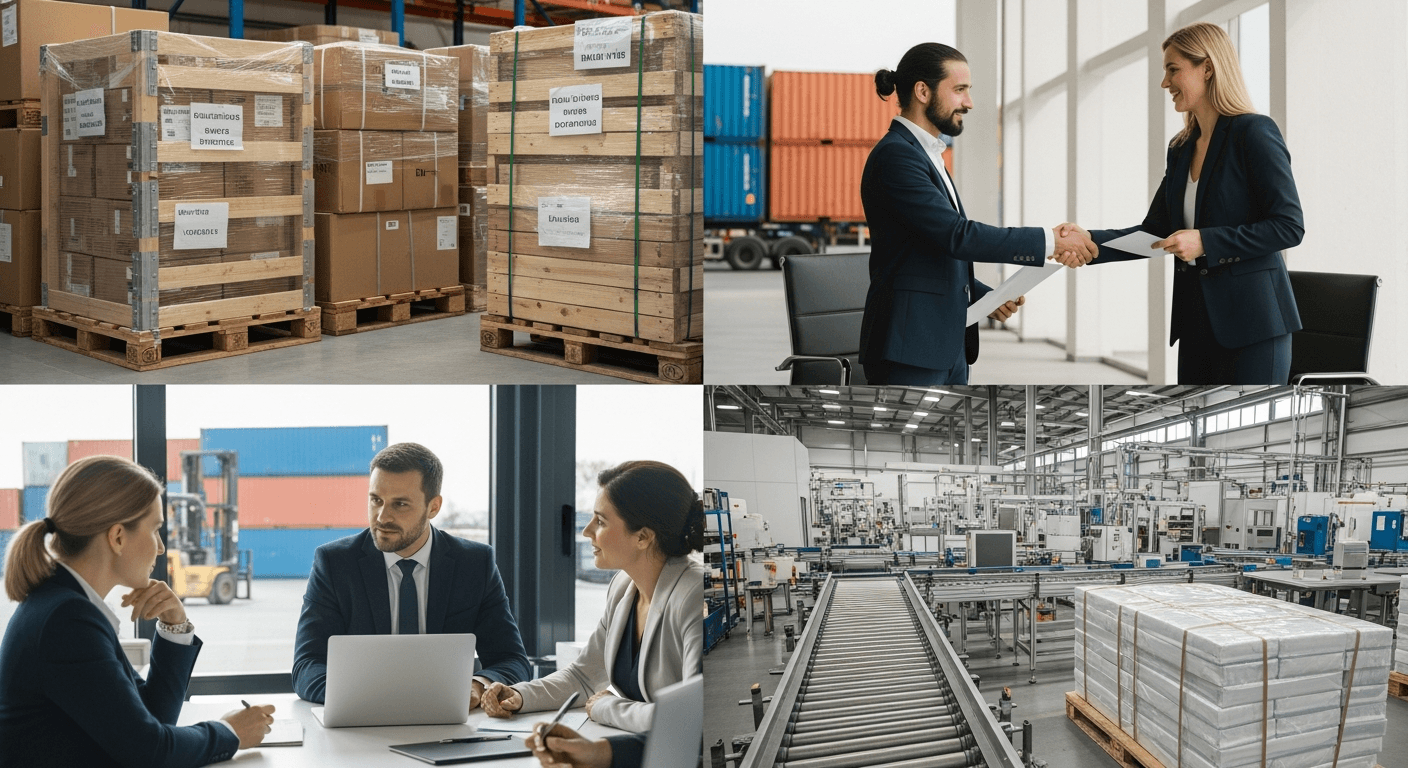
How to Get Your Product Into Romanian Supermarkets: A Manufacturer's Guide
Romania is one of the fastest-growing retail markets in Central and Eastern Europe, and for manufacturers with a physical product, that growth represents a genuine commercial opportunity. Yet most export directors we speak to have never seriously considered Bucharest as a stepping stone, let alone a destination market. That's a mistake worth correcting.
In this guide, you'll learn which retail chains dominate the Romanian grocery sector, who the decision-makers are, how the buying process actually works, and what practical steps you need to take to get your product onto Romanian supermarket shelves. Whether you produce food, cosmetics, confectionery, or household goods, the Romanian retail landscape is more accessible than you might think, and the window for early-mover advantage is still open.
Why Romania's Retail Market Deserves Your Attention Now
Romania is not a small, niche market. It is a country of nearly 20 million people with a modern retail infrastructure that has expanded significantly over the past decade. According to Colliers, Romania's modern retail market surpassed the 5 million square metre threshold in 2025, with 2026 expected to be the most active year for new retail deliveries since 2011.
That kind of infrastructure growth signals something important: retailers are actively expanding, opening new stores, and, crucially, looking for new suppliers to fill those shelves. For a manufacturer with a differentiated product, this is the right moment to make contact.
📊 Romania's modern retail market surpassed 5 million square metres in 2025, with 2026 forecast as the most active year for new retail openings since 2011. (Source: Colliers via The Diplomat)
The country has also emerged as a strategic destination for international retail, attracting both European and global chains looking to establish or deepen their footprint. For a Polish or CEE manufacturer, the geographic proximity alone makes Romania a logical export market to explore alongside the UK, DACH, and Nordics.
Who Controls the Shelves: Romania's Dominant Supermarket Chains
Before you can get your product into Romanian supermarkets, you need to understand who actually controls those shelves. The Romanian grocery retail sector is heavily consolidated, with German-owned discounters and hypermarkets leading the way.
Lidl and Kaufland lead Romania's food retail market, according to a RISCO study, with both chains holding dominant positions in consumer preference and store count. These two retailers are part of the Schwarz Group and operate centralised buying structures, meaning purchasing decisions are often made at a regional or European level, not locally in Bucharest.
📊 Lidl and Kaufland lead Romania's supermarket market, making them the primary gatekeepers for any manufacturer seeking mass-market retail distribution. (Source: Romania Journal)
Beyond the German chains, the competitive landscape includes:
- Profi - one of the largest proximity store networks in Romania
- Mega Image (owned by Ahold Delhaize) - strong in urban areas, particularly Bucharest
- Penny (Rewe Group) - discount format with growing store count
- Carrefour - hypermarket and convenience formats
- Auchan - hypermarket presence in major cities
According to Romania's supermarket sector, which posts steady growth led by German-owned chains, the dominance of Lidl and Kaufland means that for most manufacturers, these two chains should be the primary focus of any initial market entry effort.
Who Are the Decision-Makers?
Understanding the retail landscape is only half the picture. The other half is knowing exactly who you need to speak to. In Romanian retail chains, the key contacts are:
- Category managers and category buyers at chain headquarters
- Import managers or purchasing directors for international sourcing
- Private label managers if you are open to own-brand production
- Local importers and distributors who act as intermediaries for brands without a Romanian entity
For most foreign manufacturers, working through a local importer or distributor is the most practical first step, as it removes the need for a Romanian legal entity and simplifies logistics, invoicing, and regulatory compliance.
Understanding Romanian Consumer Trends Before You Pitch
A purchasing director at Kaufland Romania is not going to list your product simply because you have a good factory. They need to see that your product fits what Romanian consumers are actually buying. That means doing your homework before you pick up the phone.
Consumer trends in Romania for 2024 point towards growing interest in health-conscious products, premium private label, and international flavours, particularly in food and cosmetics. Romanian shoppers are increasingly brand-aware and willing to trade up for quality, which creates genuine space for well-positioned foreign manufacturers.
💡 Key Insight: Romanian consumers are actively trading up in food and cosmetics categories. If your product has a clear quality or origin story (Polish craftsmanship, Scandinavian formulation, natural ingredients), that narrative has commercial value in the Romanian retail context.
The PwC Voice of the Consumer Survey Romania 2024 also highlights that Romanian shoppers are increasingly influenced by sustainability credentials and product transparency, two areas where many CEE manufacturers already have strong stories to tell. If you have certifications, provenance claims, or clean-label credentials, make sure they are front and centre in your retailer pitch.
The Step-by-Step Process to Get Your Product Into Romanian Supermarkets
Getting listed in a Romanian retail chain is not a single conversation. It is a process, and understanding that process in advance will save you months of wasted effort.
Step 1: Prepare Your Commercial Documentation
Before you approach any buyer, you need a professional trade pack ready in English (and ideally Romanian for larger chains). This should include:
- Product catalogue with EAN codes, shelf dimensions, and MOQs
- Pricing in EUR with DAP Romania incoterms
- Certifications (IFS, BRC, ISO 22000 for food; GMP or ISO for cosmetics)
- Shelf-life data and storage requirements
- Country of origin and ingredient/material declarations
- Marketing support you can offer (promotions, sampling, in-store activation)
⚡ Pro Tip: Romanian retail buyers, particularly at Kaufland and Lidl, operate within strict supplier qualification frameworks. Having your IFS or BRC certification number ready in your first email significantly increases your credibility and speeds up the qualification process.
Step 2: Decide Between Direct Listing and Distributor Entry
There are two primary routes to Romanian supermarket shelves:
Route A: Direct to Retailer You approach the category buyer or import manager at the chain directly. This works best if you have volume capacity, competitive pricing, and the ability to handle Romanian regulatory compliance (product labelling in Romanian, VAT registration, etc.).
Route B: Via a Local Importer or Distributor You find a Romanian importer or distributor who already has relationships with the retail chains and who will take on the commercial and logistical complexity. This is slower in terms of margin but faster in terms of market access.
For most manufacturers entering Romania for the first time, Route B is the more realistic starting point.
Step 3: Make Contact with the Right People
This is where most manufacturers get stuck. They know they need to speak to a purchasing director or category manager at Kaufland Romania, but they have no idea how to find that person, let alone get a meeting.
Cold email to Romanian retail buyers is possible but requires persistence and the right messaging. Alternatively, trade fairs such as the Warsaw Food Expo or Anuga in Cologne do attract Romanian retail buyers, but attending a trade fair costs upwards of 15,000 EUR for a booth, and there is no guarantee the right buyer will walk past your stand.
💡 Key Insight: At ProspectX, we've seen this firsthand. When manufacturers wait for buyers to find them at trade fairs, they often spend three days on their feet and come home with a handful of business cards and no concrete follow-up. Structured, direct contact with named decision-makers consistently outperforms passive exhibition.
Casper Morawski, founder of ProspectX, puts it plainly: "A trade fair booth is a gamble. You pay 15,000 EUR and hope the right buyer walks past. Contacting a named import manager at Profi or Mega Image directly is a choice, not a gamble."
Step 4: Navigate the Listing Process
Once you have a meeting with a category buyer, the listing process typically involves:
- Initial product presentation - samples, pricing, and commercial terms
- Internal evaluation - the buyer presents to their category team
- Supplier qualification audit - particularly for food and cosmetics
- Commercial negotiation - pricing, payment terms, promotional commitments
- Listing agreement - formal contract, often with a listing fee or promotional budget requirement
- First order and logistics setup - warehouse delivery requirements, EDI systems
This process can take anywhere from three to nine months depending on the chain and category. Patience and consistent follow-up are essential.
The Romania Market Entry Opportunity for CEE Manufacturers
For Polish, Czech, Slovak, and Hungarian manufacturers, Romania represents a natural geographic expansion. The road distance from Warsaw to Bucharest is roughly 1,600 km, logistics are straightforward, and there is no language barrier at the B2B level (English is widely spoken in Romanian retail buying offices).
Romania's retail market continues to expand despite economic slowdown, according to Colliers, which points to the resilience of the sector and the continued appetite for new product listings even in a tighter economic environment.
For manufacturers who are already exporting to the UK, DACH, or Nordics, Romania can be a complementary market rather than a replacement priority. The buyer relationships you build with Romanian importers and distributors can also open doors to other Balkan and Eastern European markets over time.
If you are exploring export markets beyond Romania, our guide to exporting to the UK as a manufacturer and our overview of DACH market entry for food and cosmetics brands cover those routes in detail.
📊 Romania's retail market is expanding despite economic headwinds, with Colliers confirming continued growth in modern retail formats. (Source: Intellinews / Colliers)
Trade Fairs vs. Direct Contact: What Actually Works for Romanian Market Entry
Many manufacturers default to trade fairs when they think about finding foreign buyers. It is a familiar format and feels safe. But when you look at the numbers, the logic starts to break down.
| Approach | Cost | Duration | Guaranteed Meetings | Year-Round? |
|---|---|---|---|---|
| Trade fair booth (e.g., Anuga) | 15,000+ EUR | 3-5 days | No | No |
| ProspectX pilot programme | Fixed fee | 8-12 weeks | 10 minimum | Yes |
For a manufacturer with a limited export budget, spending 15,000 EUR on a trade fair booth in the hope of meeting a Romanian category buyer is a significant risk. A structured programme that reaches named purchasing directors and import managers at Romanian retail chains, distributors, and importers is a more cost-effective and measurable alternative.
At ProspectX, our pilot programmes guarantee a minimum of 10 qualified meetings within 8-12 weeks, delivered to manufacturers in food, cosmetics, confectionery, and apparel. For one apparel manufacturer, our programmes have generated over 100 qualified buyer inquiries per month for more than two years. You can read more about how our buyer-meeting process works or explore results from our programmes.
⚡ Pro Tip: If you are serious about Romanian market entry, do not wait for the next trade fair cycle. Romanian retail buyers receive supplier approaches year-round, and the best listing windows open when a chain is expanding into new store formats or refreshing a category, not just during trade fair season.
Key Takeaways
- Romania's modern retail market surpassed 5 million square metres in 2025, making it one of the most active retail expansion markets in CEE right now.
- Lidl and Kaufland dominate Romanian grocery retail, so any serious market entry strategy must include a plan for approaching their category buyers or working with distributors who already supply them.
- Romanian consumers are increasingly interested in health, premium quality, and international brands, which creates genuine shelf space for well-positioned foreign manufacturers.
- The most practical first step for most foreign manufacturers is finding a local Romanian importer or distributor, rather than approaching retail chains directly without a local entity.
- Preparing professional commercial documentation (certifications, EAN codes, EUR pricing, Romanian-language labelling) before your first buyer meeting will significantly shorten the listing process.
- Contacting named purchasing directors and import managers directly is more cost-effective and measurable than relying solely on trade fair attendance for Romanian market entry.
- CEE manufacturers (Polish, Czech, Slovak, Hungarian) have a natural geographic and logistical advantage when entering Romania and should treat it as a complement to UK, DACH, and Nordics expansion.
Frequently Asked Questions
How long does it take to get a product listed in a Romanian supermarket?
The listing process in Romanian retail chains typically takes between three and nine months from first contact to first order, depending on the chain and product category. Chains like Kaufland and Lidl operate structured supplier qualification processes that include audits and formal commercial negotiations, which add time. Working through a local distributor who already has a relationship with the buyer can shorten this timeline considerably.
Do I need a Romanian legal entity to sell into Romanian supermarkets?
You do not need a Romanian legal entity to sell into Romanian supermarkets if you work through a local importer or distributor, who handles the commercial relationship with the retailer on your behalf. If you choose to approach retail chains directly, you will likely need to register for Romanian VAT and comply with local labelling regulations, including Romanian-language product information. For most manufacturers entering Romania for the first time, the distributor route removes this complexity.
Which Romanian retail chains are the best starting point for a foreign manufacturer?
Lidl and Kaufland are the dominant chains by market share and consumer reach, making them the most impactful listing targets for volume-focused manufacturers. However, their centralised buying structures and strict supplier qualification requirements make them harder to enter quickly. Chains like Profi, Mega Image, or Penny may be more accessible as a first listing, particularly if you are working with a local distributor who already supplies them.
What certifications do I need to supply Romanian supermarkets?
For food manufacturers, IFS Food or BRC Global Standards certification is strongly preferred by major chains and may be a mandatory requirement for Lidl and Kaufland. Cosmetics manufacturers should hold GMP certification (ISO 22716). Having your certification documentation ready before your first buyer meeting demonstrates professionalism and speeds up the supplier qualification process.
Is Romania a realistic export market for a small or mid-sized manufacturer?
Yes, Romania is a realistic export market for manufacturers with 20 to 500 employees, particularly those in food, cosmetics, confectionery, or household goods. The market is large enough to justify the investment, logistics from CEE are straightforward, and the retail sector is actively expanding. The key is approaching the right decision-makers with the right commercial proposition, rather than waiting to be discovered at a trade fair.
Conclusion
Getting your product into Romanian supermarkets is not a simple task, but it is a realistic one for manufacturers who approach it with the right preparation and the right contacts. Romania's retail sector is growing, consumer demand for quality international products is rising, and the dominant chains are actively expanding their store networks and supplier bases.
The practical steps are clear: understand the retail landscape, prepare your commercial documentation, decide on your entry route, and make direct contact with the purchasing directors and import managers who control the buying decisions. The manufacturers who succeed are not necessarily those with the biggest budgets; they are the ones who make the right connections at the right time.
If you are a manufacturer looking to find foreign buyers without spending 15,000 EUR on a trade fair booth, ProspectX can help. We deliver ready-made meetings with import managers, purchasing directors, and distributors in your chosen markets, including CEE, UK, DACH, Nordics, and Benelux. Our pilot programme guarantees a minimum of 10 qualified meetings within 8-12 weeks, on a fixed fee. You get an exact quote on the first call. Book a free first call to discuss your export goals and find out whether Romanian market entry is the right next step for your business.
Related reading: How to Find Distributors in the UK as a Foreign Manufacturer | DACH Market Entry for Food and Cosmetics Manufacturers