How to Find Retail Buyers in Germany: 2026 Guide
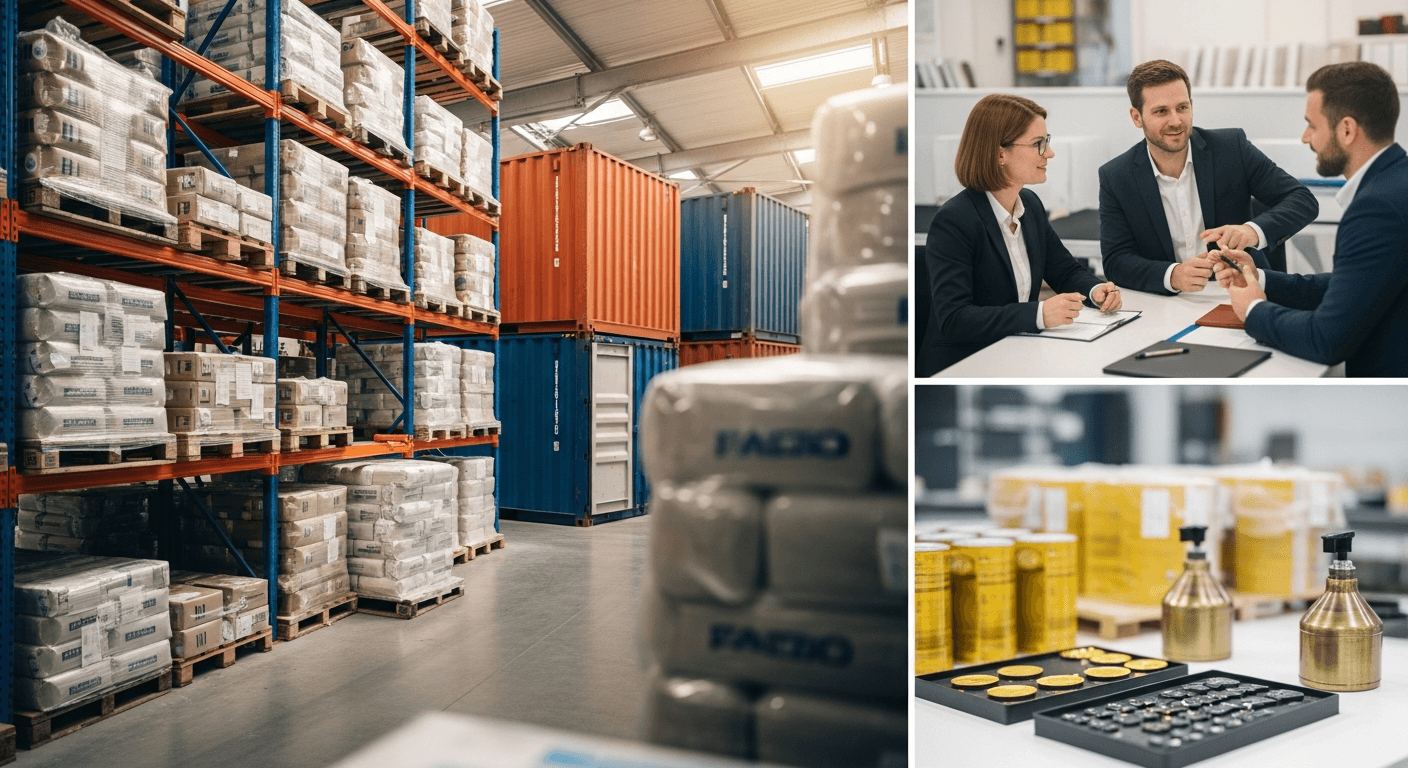
To find retail buyers in Germany, identify the specific category managers, purchasing directors, and import managers at chains like REWE, Edeka, Aldi, and dm-drogerie markt using LinkedIn Sales Navigator and XING, then contact them directly with professional, certification-led outreach — properly targeted campaigns achieve 4-6% response rates at a fraction of trade fair costs. The opportunity is enormous: €659 billion in annual sales makes Germany Europe's largest consumer market, yet many manufacturers still rely solely on expensive trade fairs that cost €15,000+ for just three days of uncertain outcomes.
The truth is, German retail buyers are actively seeking new suppliers year-round, but they're not always walking trade fair aisles. Import managers at major chains like REWE, Edeka, and dm-drogerie markt are making purchasing decisions every week, and they're increasingly open to direct supplier outreach when done professionally.
This guide reveals exactly how to identify and connect with German retail chain buyers, from category managers at discount chains to purchasing directors at premium department stores. You'll learn proven strategies that work better than trade fairs - and cost a fraction of the price.
Understanding the German Retail Landscape
Germany's retail sector is both massive and highly consolidated. The top 10 retail groups control over 70% of the market, making it crucial to understand the key players and their buying structures.
The retail hierarchy typically includes discount chains (Aldi, Lidl), full-service supermarkets (REWE, Edeka), hypermarkets (Kaufland, Real), and speciality retailers. Each category has distinct buyer personas and procurement processes.
📊 E-commerce sales are projected to reach €116 billion by 2025, creating new opportunities for manufacturers to connect with online retail buyers alongside traditional brick-and-mortar chains.
German retailers prioritise quality, sustainability credentials, and competitive pricing. They also value long-term partnerships over one-off deals, making the initial buyer relationship crucial for sustained success.
Key Retail Segments and Their Buyers
Food Retail: Dominated by REWE Group, Edeka, Aldi, and Lidl. Category managers here focus on private label development and seasonal promotions.
Non-Food Retail: Includes dm-drogerie markt (health & beauty), MediaMarkt Saturn (electronics), and Zalando (fashion). These buyers often have more flexibility for innovative products.
Department Stores: Galeria Kaufhof and premium chains where purchasing directors seek differentiated products with higher margins.
Identifying the Right Retail Buyers
Finding retail buyers in Germany starts with understanding buyer hierarchies and decision-making structures in DACH retail. Unlike smaller markets where one person might handle multiple categories, German retail chains have specialised roles.
Category Managers oversee specific product segments (beverages, snacks, cosmetics) and make strategic sourcing decisions. Purchasing Directors handle vendor relationships and negotiate terms. Import Managers specifically focus on international suppliers and new market entries.
💡 Key Insight: At discount chains like Aldi and Lidl, buyers have significant autonomy but extremely high volume requirements. At premium retailers, buyers focus more on uniqueness and brand story.
The most effective approach involves mapping your product to the right category first, then identifying the specific buyer responsible. For example, if you manufacture organic snacks, you'd target the "Organic/Bio" category manager rather than the general snacks buyer.
Research Tools and Databases
LinkedIn Sales Navigator remains the most effective tool for finding German retail buyers. Search by job title ("Einkäufer," "Category Manager," "Purchasing Director") and company to build targeted lists.
XING is Germany's professional network and often provides better coverage of German executives than LinkedIn. Many senior buyers maintain active XING profiles.
Company websites typically list key personnel in their "About Us" or "Team" sections. German retailers are generally transparent about their organisational structure.
Trade publications like Lebensmittel Zeitung and TextilWirtschaft regularly feature buyer interviews and personnel changes, providing valuable intelligence.
Direct Outreach Strategies That Work
At ProspectX, we've seen that German retail buyers respond best to direct, professional communication that demonstrates clear value. Response rates in DACH markets average 4-6% when campaigns are properly targeted and executed.
Successful outreach requires three elements: precise targeting, compelling messaging, and persistent follow-up. German buyers appreciate efficiency and directness - avoid flowery language or excessive relationship-building in initial contact.
Email Templates That Generate Responses
Subject Line Formula: "[Product Category] manufacturer seeking [Retailer Name] partnership"
Example: "Organic snack manufacturer seeking REWE partnership"
Email Structure:
- Brief introduction (company name, location, product category)
- Specific value proposition (unique selling points, certifications)
- Social proof (existing retail partners, market presence)
- Clear next step (meeting request, sample offer)
⚡ Pro Tip: Always include your key certifications (BRC, IFS, organic, Fair Trade) in the first email. German buyers use these as initial screening criteria.
A Polish cosmetics manufacturer we worked with generated 12 qualified meetings with German retail buyers in 8 weeks using this approach, resulting in three new distribution partnerships.
Multi-Channel Approach
LinkedIn Messaging: Complement email outreach with LinkedIn connection requests and personalised messages. Digital buyer acquisition beyond trade fairs can significantly boost your pipeline. German executives actively use LinkedIn for business networking.
Phone Follow-up: German business culture appreciates direct phone communication. Call 2-3 days after sending an email to discuss your proposal.
Trade Publication Advertising: Strategic ads in publications like Lebensmittel Zeitung can increase brand recognition before direct outreach.
Leveraging Trade Fairs as Buyer Intelligence
While trade fairs shouldn't be your only strategy to find retail buyers in Germany (see trade fair alternatives for manufacturers), they provide valuable intelligence for year-round outreach efforts. Events like Anuga (food), Ambiente (consumer goods), and BioFach (organic) attract key decision-makers.
Over 85% of trade fair attendees are involved in purchasing decisions, making these events goldmines for buyer intelligence rather than just sales opportunities.
Use trade fairs strategically: collect business cards, understand buyer priorities, and identify decision-makers. Then follow up systematically throughout the year when buyers aren't overwhelmed by hundreds of suppliers.
📊 Trade Fair Cost Comparison: A typical German trade fair booth costs €15,000-25,000 for three days, while a year-round outreach campaign costs a fraction of that and generates more qualified meetings.
Post-Fair Follow-up Strategy
Immediate Follow-up (48 hours): Send personalised emails referencing your trade fair conversation and next steps.
Quarterly Check-ins: German retail buyers plan seasonally. Regular quarterly updates about new products, certifications, or market trends keep you visible.
Annual Planning Cycles: Most German retailers plan their private label and new product introductions 6-12 months in advance. Time your major outreach efforts accordingly.
Building Relationships with German Distributors
Many manufacturers overlook distributors when trying to find retail buyers in Germany, but distributors often provide the fastest route to market. German distributors handle approximately 40% of international product introductions to retail chains.
Distributors have established relationships with category managers and can navigate complex retail requirements like EDI integration, promotional planning, and logistics coordination.
Types of German Distributors
Category Specialists: Focus on specific product categories (organic foods, beauty products, electronics). These distributors often have exclusive relationships with major retailers.
Regional Distributors: Cover specific geographic areas or retail formats. Particularly valuable for testing market acceptance before national rollouts.
Cash & Carry Operators: Serve smaller retailers and foodservice. Metro AG is the largest, but regional players offer opportunities for niche products.
Import Specialists: Focus specifically on international brands entering the German market. They understand regulatory requirements and cultural preferences.
Distributor Outreach Best Practices
Distributor owners and purchasing managers respond to different messaging than retail buyers. They're evaluating market potential, margin opportunities, and operational complexity.
Key Messages for Distributors:
- Market size and growth potential
- Competitive differentiation
- Marketing support available
- Minimum order quantities and payment terms
- Exclusive territory rights
Casper Morawski, founder of ProspectX, notes: "We've seen manufacturers achieve faster German market entry through strategic distributor partnerships than direct retail approaches, especially in regulated categories like food and cosmetics."
Digital Strategies for Modern Retail Buyers
German retail buyers increasingly use digital channels for supplier discovery and evaluation. Online research influences 78% of B2B purchasing decisions, making your digital presence crucial for buyer attraction.
LinkedIn Content Marketing: Share industry insights, sustainability initiatives, and product innovations. German buyers follow suppliers who demonstrate thought leadership.
Company Website Optimisation: Ensure your website clearly communicates certifications, production capabilities, and export experience. German buyers research suppliers thoroughly before initial contact.
Video Content: Product demonstration videos and factory tours build credibility. German buyers value transparency in manufacturing processes.
SEO for Buyer Discovery
Optimise your website for German buyer search terms:
- "[Product category] Hersteller" (manufacturer)
- "[Product category] Lieferant" (supplier)
- "Export [product category] Deutschland"
- "Private Label [product category]"
Create dedicated landing pages for German buyers with content in German, including certifications, case studies, and contact information for your export team.
Overcoming Common Challenges
Manufacturers face predictable obstacles when trying to find retail buyers in Germany. Understanding these challenges and having solutions ready accelerates your German market entry.
Language and Cultural Barriers
68% of German business executives prefer initial communication in German, even though most speak excellent English. Professional translation of key materials demonstrates commitment to the market.
German business culture values punctuality, detailed planning, and thorough documentation. Buyers expect comprehensive product specifications, certifications, and supply chain information upfront.
Regulatory and Certification Requirements
German retail buyers have strict requirements for product certifications, especially in food, cosmetics, and children's products. Ensure you have relevant certifications before approaching buyers:
- Food: BRC, IFS, organic certification (EU-Bio)
- Cosmetics: COSMOS, Ecocert, dermatological testing
- General: ISO certifications, sustainability credentials
Competitive Market Dynamics
Germany's retail market is intensely competitive and price-sensitive. Buyers evaluate suppliers on total cost of ownership, not just unit price. This includes logistics costs, minimum order quantities, payment terms, and marketing support.
💡 Key Insight: German retailers increasingly value suppliers who can provide data analytics, category insights, and joint business planning. Position yourself as a strategic partner, not just a product supplier.
Measuring Success and ROI
Track specific metrics to evaluate your German retail buyer outreach efforts:
Response Rates: Aim for 4-6% initial response rates to cold outreach Meeting Conversion: 30-40% of responses should convert to meetings Buyer Quality: Track meetings with actual decision-makers vs. junior staff Time to First Order: German retail sales cycles average 6-12 months Account Value: Measure average order size and annual purchase volumes
Compare these metrics against trade fair costs and results. A typical pilot campaign generates 10-15 qualified meetings in 8-12 weeks at a fraction of trade fair costs.
Long-term Relationship Metrics
Account Penetration: Number of product categories or store formats Share of Wallet: Your percentage of buyer's category purchases Contract Renewals: Annual contract renewal rates Referral Generation: Introductions to other retail buyers or distributors
Successful German retail relationships often expand beyond initial product categories. A food manufacturer might start with one product line and eventually supply private label products across multiple categories.
Key Takeaways
- German retail buyers prefer direct, professional communication over trade fair booth visits, with response rates of 4-6% achievable through targeted outreach
- Focus on category managers, purchasing directors, and import managers rather than generic "buyer" titles when identifying decision-makers at German retail chains
- Distributors handle 40% of international product introductions to German retailers and often provide faster market entry than direct retail approaches
- German buyers prioritise certifications (BRC, IFS, organic) and expect comprehensive documentation before considering new suppliers
- Digital presence and German-language materials significantly improve buyer response rates, with 68% of executives preferring initial German communication
- Year-round systematic outreach costs a fraction of trade fair participation (€15,000+ for three days) while generating more qualified meetings
- Successful German retail relationships require 6-12 month sales cycles but often expand across multiple product categories once established
Conclusion
Finding retail buyers in Germany requires a systematic, professional approach that goes far beyond hoping for trade fair encounters. The German market rewards manufacturers who invest in understanding buyer hierarchies, cultural preferences, and decision-making processes.
The most successful manufacturers combine multiple strategies: direct outreach to identified buyers, strategic distributor partnerships, and digital presence optimisation. This approach generates consistent meetings with qualified decision-makers while building long-term market presence.
German retail buyers are actively seeking new suppliers year-round, but they're evaluating partners based on professionalism, quality credentials, and strategic value. Manufacturers who can demonstrate these qualities through targeted outreach will find Germany's massive retail market remarkably accessible.
If you're a manufacturer looking to find retail buyers in Germany without spending €15,000+ on trade fairs, ProspectX can help. We deliver ready-made meetings with import managers, purchasing directors, and distributors in the German market. Book a call to discuss your export goals and learn how we've helped manufacturers secure German retail partnerships.
Reading about finding buyers?
We could be booking meetings with them.
ProspectX books sales meetings with distributors, importers, and retail buyers in your target export markets. You focus on selling; we put the right people in your calendar.

Casper Morawski
Founder, ProspectX
I book sales meetings between manufacturers and foreign buyers — and write down what works. I built ProspectX after watching manufacturers spend thousands on trade fairs with nothing guaranteed.
LinkedIn →