FDA Food Facility Registration for EU Manufacturers
In short
FDA food facility registration is required before your first shipment to the US. It is free and must be renewed every two years, between 1 October and 31 December of even-numbered years. You need a DUNS number and a US agent who is reachable during US business hours. The guide covers the steps in order, including FSVP and prior notice.
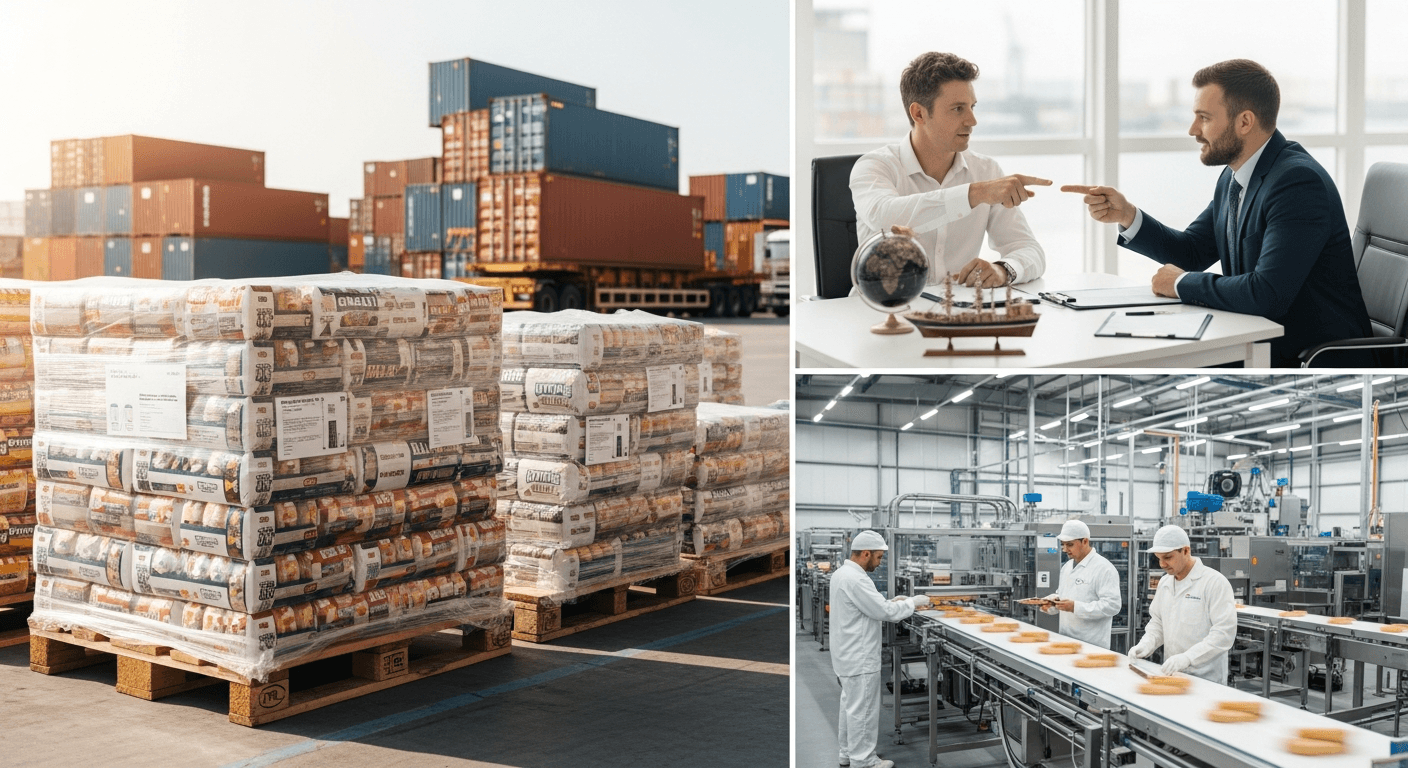
FDA Food Facility Registration: Complete Guide for European Manufacturers
FDA food facility registration is a legal requirement for any European facility that manufactures, processes, packs, or holds food destined for the US market - the registration itself is free, must be completed before your first shipment, and must be renewed every two years between October 1st and December 31st of each even-numbered year. The opportunity justifies the effort: European agri-food exports to the U.S. reached €25.097 billion from January to October 2024, an 11% increase compared to the same period in 2023. Yet many European manufacturers stumble at this first hurdle.
This comprehensive guide breaks down everything you need to know about FDA food facility registration for European manufacturers. From mandatory registration requirements to finding the right US agent, we'll help you navigate the compliance maze and position your products for success in America's lucrative food market.
Understanding FDA Food Facility Registration Requirements
FDA food facility registration isn't optional – it's a legal requirement for any foreign facility that manufactures, processes, packs, or holds food for human or animal consumption destined for the US market. This applies whether you're a Polish confectionery manufacturer shipping to New York or a German beverage producer targeting California distributors.
The registration system was established under the Public Health Security and Bioterrorism Preparedness and Response Act of 2002, giving the FDA visibility into the global food supply chain. For European manufacturers, this means your facility must be registered before your first shipment crosses US borders.
The registration covers facilities involved in manufacturing, processing, packing, or holding food. This includes:
- Primary manufacturing facilities (bakeries, dairies, meat processors)
- Secondary processing plants (packaging, bottling, canning)
- Warehouses and distribution centres that hold food
- Co-packers and contract manufacturers
Biennial Renewal Requirements
One critical aspect that catches many European manufacturers off guard is the biennial renewal requirement. FDA food facility registration must be renewed every two years during a specific window: October 1st to December 31st of each even-numbered year.
Missing this renewal window can result in your products being detained at US ports, creating costly delays and potentially damaging relationships with American buyers. Set calendar reminders well in advance of these deadlines.
The DUNS Number Prerequisite
Before you can complete your FDA food facility registration, you'll need a Data Universal Numbering System (DUNS) number from Dun & Bradstreet. This unique nine-digit identifier is used by the US government to track business entities.
For European manufacturers, obtaining a DUNS number typically takes 1-2 weeks and is free of charge when requested directly from Dun & Bradstreet. However, be wary of third-party services that charge fees for this process – the official DUNS number request is always free.
💡 Pro Tip: Apply for your DUNS number as soon as you decide to export to the US. This prevents delays when you're ready to complete your FDA registration and start shipping.
The DUNS number serves multiple purposes beyond FDA registration. Many US importers and distributors use it to verify your business credentials, and it's required for various other US government interactions.
US Agent Requirements: Your American Representative
Every foreign food facility must designate a US Agent – a person who resides in the United States and is available during US business hours to serve as the primary communication link between the FDA and your facility.
Your US Agent responsibilities include:
- Receiving and responding to FDA communications
- Assisting with FDA inspections and investigations
- Being available during standard US business hours
- Having physical presence in the United States
Choosing the Right US Agent
You have several options for your US Agent:
Option 1: US-based employees or partners If you have sales representatives, distributors, or subsidiary offices in the US, they can serve as your US Agent. This works well if they understand FDA regulations and can respond promptly to official communications.
Option 2: Professional regulatory services Many companies specialise in providing US Agent services for foreign food manufacturers. They typically charge $200-500 annually and handle all FDA communications professionally.
Option 3: Legal or consulting firms Some law firms and consulting companies offer US Agent services as part of broader regulatory compliance packages.
At ProspectX, we've seen manufacturers struggle when their US Agent isn't responsive or knowledgeable about FDA requirements. A Polish dairy manufacturer we worked with faced a two-week shipment delay because their US Agent was unavailable during a critical FDA inquiry.
Foreign Supplier Verification Program (FSVP) Compliance
While FDA food facility registration gets your facility on the radar, the Foreign Supplier Verification Program (FSVP) ensures your products meet US food safety standards. Under FSVP, US importers must verify that foreign suppliers (that's you) meet applicable US food safety standards.
The FSVP requires US importers to:
- Conduct hazard analysis of imported foods
- Evaluate foreign supplier food safety risks
- Verify that preventive controls are implemented
- Maintain detailed records of verification activities
When You Need an FSVP Importer
If there's no US owner or consignee for your products, you'll need to designate a US agent or representative to act as the FSVP importer. This often happens when European manufacturers sell directly to US retailers or through complex distribution arrangements.
⚡ Pro Tip: Work with your US buyers to clarify FSVP responsibilities early in the relationship. Misunderstandings about who handles FSVP compliance can delay shipments and strain partnerships.
Prior Notice Requirements for Every Shipment
Beyond facility registration, every food shipment to the US requires Prior Notice submission to the FDA. This must be filed before your products arrive at US ports, with specific timing requirements:
- Road transport: Minimum 2 hours before arrival
- Air or rail transport: Minimum 4 hours before arrival
- Water transport: Minimum 8 hours before arrival
Prior Notice can be submitted up to 15 days before arrival through the FDA's Prior Notice System Interface (PNSI). The notice must include detailed information about:
- Product descriptions and quantities
- Manufacturing facility details
- Intended use and recipients
- Anticipated arrival information
Common Prior Notice Mistakes
From our experience working with European manufacturers, these are the most frequent Prior Notice errors:
- Insufficient product descriptions: "Chocolate bars" isn't specific enough – you need "Dark chocolate bars with almonds, 100g packages"
- Incorrect facility information: Using distributor details instead of actual manufacturing facility
- Missing timing deadlines: Submitting notices too late, causing port delays
- Incomplete recipient information: Vague or incorrect US consignee details
Step-by-Step FDA Registration Process
Here's your complete roadmap to FDA food facility registration:
Step 1: Obtain Your DUNS Number
Contact Dun & Bradstreet directly to request your free DUNS number. Allow 1-2 weeks for processing.
Step 2: Designate Your US Agent
Choose and formally designate your US Agent. Ensure they understand their responsibilities and have your written authorisation.
Step 3: Gather Required Information
Before starting your registration, compile:
- Complete facility address and contact information
- DUNS number
- US Agent details and contact information
- Food categories you manufacture/process
- Parent company information (if applicable)
Step 4: Complete Online Registration
Use the FDA's Food Facility Registration System to submit your application. The system is available 24/7 and provides immediate confirmation upon successful submission.
Step 5: Maintain Registration Records
Keep copies of your registration confirmation and set reminders for biennial renewals.
📊 The EU recorded a trade surplus of €15.421 billion in its agri-food trade with the U.S. in 2023
Costs and Timeline Considerations
FDA food facility registration itself is free, but associated costs include:
| Component | Typical Cost | Timeline |
|---|---|---|
| DUNS Number | Free | 1-2 weeks |
| FDA Registration | Free | Immediate |
| US Agent Service | $200-500/year | 1-3 days |
| Regulatory Consulting | $1,000-3,000 | 2-4 weeks |
| FSVP Compliance | $500-2,000 | 4-6 weeks |
Compare this to exhibiting at a major US trade fair, which typically costs €15,000-25,000 for three days, plus travel and accommodation expenses. FDA compliance is a one-time investment that opens the entire US market to your products.
Common Registration Pitfalls and How to Avoid Them
After working with dozens of European food manufacturers, we've identified the most common FDA registration mistakes:
Pitfall 1: Waiting Until the Last Minute
Many manufacturers only start the FDA registration process when they have a confirmed US order. This creates unnecessary pressure and potential delays.
Solution: Complete your FDA registration as part of your US market entry strategy, before you start actively seeking American buyers.
Pitfall 2: Inadequate US Agent Selection
Choosing an unresponsive or unknowledgeable US Agent can cause serious problems during FDA inspections or communications.
Solution: Vet potential US Agents thoroughly. Ask for references from other foreign food manufacturers and verify their FDA experience.
Pitfall 3: Forgetting Biennial Renewals
Missing the biennial renewal window can result in shipment detentions and lost sales.
Solution: Set multiple calendar reminders starting in August of even-numbered years. Consider using a professional service that tracks renewals automatically.
Pitfall 4: Incomplete Product Categorisation
Incorrectly categorising your food products can lead to compliance issues and inspection problems.
Solution: Review FDA food categories carefully and select all applicable categories for your products. When in doubt, consult with a regulatory expert.
Beyond Registration: Building US Market Success
FDA food facility registration is just the first step in your US market journey. Once you're compliant, the real work begins: finding qualified American buyers for your products.
Traditional approaches like trade fairs can be expensive and time-consuming. A single booth at a major US food trade show costs €15,000-25,000, plus travel expenses, with no guarantee of meeting qualified buyers.
📊 EU agri-food exports climbed to EUR 238.4 billion in 2025, a 1% increase compared to 2024
At ProspectX, we help FDA-compliant European manufacturers connect directly with US import managers, purchasing directors, and retail buyers. Our approach delivers ready-made meetings with decision-makers, eliminating the uncertainty of trade fair booth visits.
Market Opportunities and Challenges Ahead
The US food import market continues to grow, but European exporters face evolving challenges. Recent data shows some concerning trends alongside the overall growth.
EU exports of wine and wine-based products to the U.S. had a reduction of €721 million (-14%) in 2025, though the U.S. remained the first destination for these products. This highlights the importance of having proper regulatory compliance and strong buyer relationships to navigate market volatility.
Potential trade disruptions, including discussions around tariffs for 2025-2026, could significantly impact trade flows, particularly for high-value products like wine, olive oil, and dairy. This makes FDA compliance and direct buyer relationships even more critical for European manufacturers.
Sector-Specific Considerations
Different food categories face unique challenges in the US market:
Dairy Products: Require additional FDA approvals and state-level certifications in many cases. The regulatory pathway is complex but the market opportunity is substantial.
Organic Foods: Must comply with both FDA regulations and USDA organic certification requirements. However, the premium pricing often justifies the additional compliance costs.
Confectionery and Snacks: Generally have straightforward FDA requirements but face intense competition from established US brands.
Beverages: Alcohol requires additional TTB (Alcohol and Tobacco Tax and Trade Bureau) approvals, while non-alcoholic beverages focus primarily on FDA compliance.
Key Takeaways
- FDA food facility registration is mandatory for all European manufacturers exporting food to the US, with biennial renewals required every even-numbered year
- You must obtain a free DUNS number from Dun & Bradstreet before completing your FDA registration
- Every foreign facility needs a designated US Agent who resides in America and is available during US business hours
- Foreign Supplier Verification Program (FSVP) compliance is critical, requiring either your US importer to handle verification or designating a US representative
- Prior Notice must be filed for every shipment with specific timing requirements based on transport method
- The US represents a €27+ billion market opportunity for European food exporters, making compliance investment worthwhile
- Professional regulatory support typically costs €1,000-3,000 compared to €15,000+ for a single trade fair booth
Conclusion
FDA food facility registration for European manufacturers might seem daunting, but it's a manageable process that opens doors to America's massive food market. With European agri-food exports to the US growing by 11% year-over-year, proper FDA compliance positions your business for sustainable success.
The key is starting early, choosing reliable partners, and maintaining ongoing compliance. Once you're FDA-registered, focus on building relationships with qualified US buyers who value European quality and innovation.
If you're a manufacturer looking to find American buyers without spending €15,000+ on trade fairs, ProspectX can help. We deliver ready-made meetings with import managers, purchasing directors, and retail buyers in the US market. Contact us to discuss your export goals and learn how we complement your FDA compliance efforts with direct buyer connections.