Automechanika Frankfurt: Stand Costs and ROI
In short
Discover how auto parts manufacturers can maximise their Automechanika Frankfurt investment with proven strategies for booth ROI and year-round export growth.
Ask your AI about this guide:ChatGPTClaudePerplexity
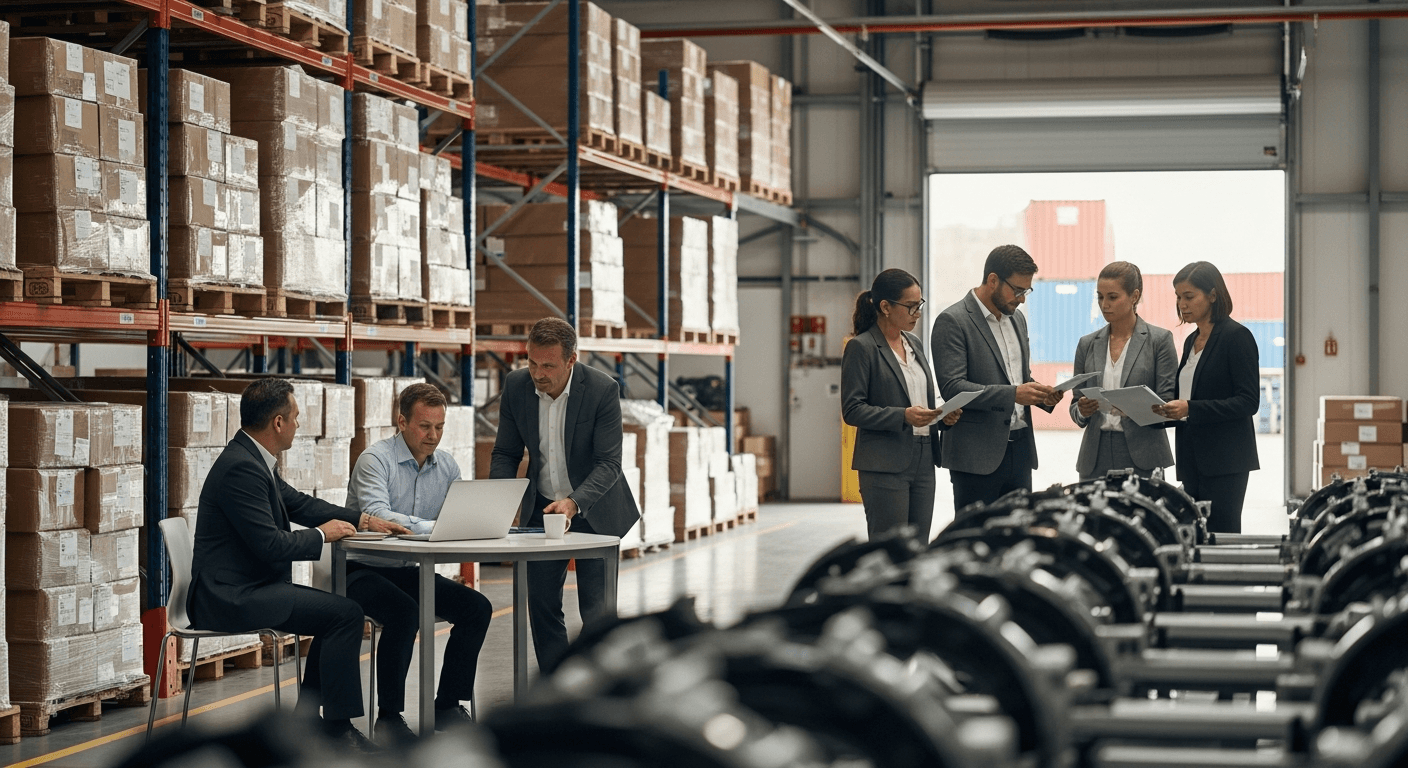
Automechanika Frankfurt 2024: Maximising ROI for Auto Parts Manufacturers
Auto parts manufacturers maximise Automechanika Frankfurt ROI by securing 15+ confirmed meetings with distributors and purchasing directors before the fair opens - through a systematic 8-week programme of contact before the event - and contacting every qualified prospect within 48 hours afterwards; exhibitors who do this achieve 3x higher conversion rates than those relying on walk-in traffic. Automechanika Frankfurt remains the world's largest automotive trade fair, but with booth costs soaring past €15,000 for just three days, auto parts manufacturers need a strategic approach to justify their investment. The global automotive aftermarket is projected to reach $722.8 billion by 2025, yet many manufacturers struggle to convert trade fair visits into meaningful distributor partnerships.
Whether you're a Polish brake pad manufacturer targeting German distributors or a Czech lighting components company seeking Nordic retail chains, this guide reveals how to maximise your Automechanika Frankfurt ROI whilst building sustainable export growth beyond the three-day event.
Understanding Automechanika Frankfurt's True Cost for Auto Parts Manufacturers
The sticker price of an Automechanika booth tells only part of the story. Smart manufacturers calculate the total investment including travel, accommodation, staff time, and opportunity costs.
Breaking Down Automechanika Booth Costs
A typical 18m² booth at Automechanika Frankfurt costs between €12,000-€18,000 before additional expenses. When you factor in:
- Stand construction and design: €8,000-€15,000
- Staff travel and accommodation: €3,000-€5,000
- Product shipping and logistics: €2,000-€4,000
- Marketing materials and samples: €1,500-€3,000
The true investment often exceeds €25,000 for a professional presence.
📊 The European automotive aftermarket grew by 4.2% in 2023, driven by increasing vehicle complexity and longer vehicle lifespans.
The Hidden Opportunity Cost
Whilst your export team spends a week preparing for and attending Automechanika, they're not doing the year-round work that builds sustainable distributor relationships. At ProspectX, we've seen manufacturers book 12-15 qualified meetings with European purchasing directors in the same timeframe - at a fraction of the trade fair cost.
Strategic Booth Positioning and Design for Maximum Auto Parts Visibility
Your booth location and design directly impact visitor traffic and meeting quality. Automechanika Frankfurt spans 24 halls, and positioning within the automotive aftermarket sections (Halls 8, 9, and 11) is crucial for auto parts manufacturers.
Hall Selection Strategy
Hall 8.0: Premium aftermarket brands and OE suppliers
- Higher booth costs but quality visitor traffic
- Ideal for manufacturers targeting tier-1 distributors
- Strong presence from German and UK purchasing directors
Hall 9.0: Independent aftermarket focus
- More cost-effective positioning
- Higher volume of independent distributors and wholesalers
- Better ROI for mid-market manufacturers
Hall 11.0: Commercial vehicle aftermarket
- Specialised visitor profile
- Essential for truck and commercial vehicle parts manufacturers
💡 Key Insight: Manufacturers exhibiting in sector-specific halls report 40% higher qualified visitor engagement compared to general automotive areas.
Booth Design Elements That Drive Distributor Meetings
Successful auto parts manufacturers focus their booth design on facilitating serious business conversations:
- Private meeting areas: Essential for discussing pricing and territory agreements
- Product demonstration zones: Hands-on engagement increases purchase intent
- Digital catalogues: QR codes linking to comprehensive product specifications
- Certification displays: Prominent placement of ISO/TS 16949, IATF certifications
Pre-Fair Contact: Securing High-Value Meetings Before Automechanika
The most successful Automechanika exhibitors don't rely on walk-in traffic. They secure confirmed meetings with target distributors and purchasing directors before the fair opens.
Identifying Target Visitors
Automechanika Frankfurt attracts over 136,000 visitors, but only a fraction represent genuine export opportunities for your specific product categories. Focus your pre-fair contact on:
- Import managers from established automotive distributors
- Category buyers from retail chains (GSF, Euro Car Parts, Autodoc)
- Purchasing directors from national wholesaler networks
- Regional distributors seeking new product lines
The 8-Week Pre-Fair Programme
At ProspectX, we recommend manufacturers begin contacting buyers 8 weeks before Automechanika opens:
Weeks 1-2: Research and list building
- Identify 200-300 relevant distributors in target markets
- Gather contact details for purchasing decision-makers
- Segment by product category and geographic focus
Weeks 3-4: First messages
- Personalised emails highlighting your Automechanika presence
- Include booth number and specific meeting availability
- Attach key product catalogues and certification documents
Weeks 5-6: Follow-up and meeting scheduling
- Phone follow-up for engaged prospects
- Confirm specific meeting times and booth visits
- Send calendar invitations with booth location details
Weeks 7-8: Final preparation and confirmation
- Reconfirm all scheduled meetings
- Prepare personalised product presentations
- Brief booth staff on visitor profiles and objectives
⚡ Pro Tip: Manufacturers who secure 15+ confirmed meetings before Automechanika typically achieve 3x higher conversion rates than those relying solely on walk-in traffic.
Maximising On-Site Engagement During the Three-Day Event
With confirmed meetings scheduled, your focus shifts to maximising every interaction during Automechanika Frankfurt's intensive three days.
Day-by-Day Strategy
Day 1 (Tuesday): Focus on pre-scheduled meetings
- Morning: High-priority distributor meetings
- Afternoon: Secondary prospects and relationship building
- Evening: Networking events and informal discussions
Day 2 (Wednesday): Peak visitor day optimisation
- Leverage highest foot traffic for walk-in prospects
- Conduct product demonstrations during busy periods
- Schedule follow-up meetings for interested visitors
Day 3 (Thursday): Closing and commitment securing
- Final meetings with serious prospects
- Negotiate preliminary agreements and next steps
- Collect outstanding contact details and requirements
Qualifying Visitors Effectively
Not every booth visitor represents a genuine export opportunity. Train your team to quickly qualify prospects using these criteria:
- Decision-making authority: Can they approve new supplier agreements?
- Product fit: Do they currently distribute similar auto parts?
- Market coverage: What geographic territories do they serve?
- Volume potential: What are their typical order quantities?
- Timeline: When do they plan to introduce new product lines?
📊 The automotive parts and accessories market in Europe is expected to grow at 3.8% CAGR through 2028, driven by vehicle electrification and advanced driver assistance systems.
Post-Fair Follow-Up: Converting Conversations into Distributor Partnerships
The real ROI from Automechanika Frankfurt emerges in the weeks following the event. Systematic follow-up separates successful exhibitors from those who simply collect business cards.
The 48-Hour Rule
Contact every qualified prospect within 48 hours of the fair's conclusion. This immediate follow-up capitalises on fresh memory and demonstrates professionalism.
Email Template Structure:
- Reference specific conversation details from your booth
- Attach promised product information or samples
- Propose concrete next steps (phone call, facility visit, trial order)
- Include clear contact details and availability
Systematic Follow-Up Process
Week 1: Initial contact and information sharing
- Send personalised follow-up emails to all qualified prospects
- Provide detailed product specifications and pricing frameworks
- Schedule follow-up calls for interested distributors
Weeks 2-3: Deeper engagement and negotiation
- Conduct video calls to discuss partnership terms
- Share case studies from similar distributor relationships
- Begin preliminary territory and pricing discussions
Weeks 4-6: Closing and agreement finalisation
- Negotiate final partnership terms
- Arrange facility visits or product trials
- Execute distributor agreements and first orders
Measuring Your Automechanika ROI
Track these key metrics to evaluate your trade fair investment:
- Cost per qualified meeting: Total investment ÷ number of serious prospects
- Conversion rate: Percentage of meetings resulting in distributor partnerships
- Revenue per partnership: Average first-year sales from new distributors
- Payback period: Time required to recover total trade fair investment
Casper Morawski, founder of ProspectX, notes: "Manufacturers often focus on booth visitors rather than conversion outcomes. A successful Automechanika investment should generate measurable distributor partnerships within 90 days."
Building Year-Round Export Momentum Beyond Trade Fairs
Whilst Automechanika Frankfurt provides valuable industry exposure, sustainable export growth requires consistent year-round activity. Smart manufacturers complement their trade fair strategy with ongoing distributor contact.
The Trade Fair Limitation
Automechanika occurs biennially, creating 18-month gaps between major industry events. During these periods, competitors continue building distributor relationships whilst trade fair-dependent manufacturers wait for the next event.
💡 Key Insight: Manufacturers who maintain active export development between trade fairs achieve 60% higher annual growth rates than those relying solely on biennial events.
Complementary Export Strategies
Successful auto parts manufacturers implement multiple approaches:
Digital catalogues and online presence:
- Professional websites with downloadable product specifications
- LinkedIn engagement with automotive industry professionals
- Participation in online automotive marketplaces
Contacting distributors directly:
- Systematic contact with automotive purchasing directors
- Personalised presentations for target market segments
- Regular follow-up with existing and potential partners
Regional trade events:
- Smaller, market-specific automotive trade shows
- Industry association events and networking meetings
- Customer facility visits and technical presentations
Cost-Effective Alternatives to Major Trade Fairs
At ProspectX, we've helped automotive manufacturers achieve consistent export growth at a fraction of trade fair costs. Our approach delivers ready-made meetings with automotive purchasing directors, import managers, and distributor owners across key European markets.
Typical results for auto parts manufacturers:
- 10-15 qualified meetings in 8-12 weeks
- Direct access to decision-makers at automotive distributors
- Cost: a fixed fee versus £25,000+ for Automechanika participation
- Year-round availability vs. biennial trade fair schedule
| Approach | Cost | Timeline | Meetings | Follow-up Required |
|---|---|---|---|---|
| Automechanika Frankfurt | €25,000+ | 3 days | 20-30 | Extensive |
| ProspectX Programme | Fixed fee | 8-12 weeks | 10-15 | Systematic |
| Regional Trade Shows | €5,000-8,000 | 2 days | 8-12 | Moderate |
| Cold Email (DIY) | €500-1,000 | Ongoing | Variable | Intensive |
Sector-Specific Strategies for Different Auto Parts Categories
Different automotive component categories require tailored approaches at Automechanika Frankfurt and beyond.
Engine Components and Filters
Manufacturers of filters, gaskets, and engine components should focus on:
- OE quality certifications: Prominently display ISO/TS 16949 compliance
- Technical specifications: Detailed compatibility charts for popular vehicle models
- Quality testing data: Independent test results and performance comparisons
- Target visitors: Import managers from established filter distributors
Brake Systems and Safety Components
Brake pad, disc, and safety component manufacturers need:
- ECE R90 certification: Essential for European market access
- Performance data: Stopping distance and wear rate comparisons
- OE reference numbers: Clear cross-reference to original equipment
- Target visitors: Safety-focused distributors and retail chain buyers
Electrical Components and Lighting
With automotive electronics representing the fastest-growing aftermarket segment, electrical component manufacturers should emphasise:
- Vehicle compatibility: Support for both traditional and electric vehicles
- Technical innovation: Advanced features and smart connectivity
- Installation simplicity: Plug-and-play solutions for workshops
- Target visitors: Progressive distributors embracing automotive technology
⚡ Pro Tip: Electrical component manufacturers targeting the DACH region should emphasise TÜV certification and compatibility with German vehicle brands (BMW, Mercedes, Audi, Volkswagen).
Regional Market Focus: Targeting DACH, UK, and Nordic Distributors
Automechanika Frankfurt attracts automotive professionals from across Europe, but manufacturers should tailor their approach for specific regional markets.
DACH Market (Germany, Austria, Switzerland)
The DACH region represents Europe's largest automotive aftermarket, with Germany alone accounting for €18.2 billion in annual parts sales.
Key requirements for DACH success:
- German-language product documentation
- TÜV or equivalent quality certifications
- Competitive pricing vs. established German suppliers
- Strong technical support and warranty terms
Target distributors: GSF Germany, Stahlgruber, LKQ Europe, ATU
UK Market Opportunities
Despite Brexit complexities, the UK automotive aftermarket remains attractive for European manufacturers:
Market characteristics:
- Right-hand drive vehicle specifications
- Strong independent garage network
- Growing online automotive retail sector
- Preference for established brand partnerships
Target distributors: Euro Car Parts, GSF Car Parts, Motor Factors, Partco
Nordic Markets (Sweden, Denmark, Norway, Finland)
Nordic countries offer premium pricing opportunities but demand exceptional quality:
Success factors:
- Cold climate performance specifications
- Environmental compliance (particularly in Norway)
- Premium quality positioning
- Long-term partnership approach
Target distributors: Mekonomen, Inter-Team, Autodoc Nordic operations
Digital Integration and Technology Trends in Auto Parts Distribution
Modern automotive distributors increasingly rely on digital tools for supplier discovery and product sourcing. Manufacturers must adapt their Automechanika strategy accordingly.
E-commerce Integration
Many distributors now require suppliers to support:
- API connectivity: Direct integration with distributor inventory systems
- Digital catalogues: Searchable product databases with real-time availability
- Electronic ordering: Automated purchase order processing
- Track and trace: Real-time shipment visibility
Data-Driven Product Development
Successful auto parts manufacturers leverage market data to guide product development:
- Vehicle parc analysis: Understanding regional vehicle populations
- Failure rate data: Identifying high-replacement components
- Seasonal trends: Anticipating demand patterns
- Competitive intelligence: Monitoring competitor product launches
From our experience at ProspectX, manufacturers who demonstrate digital readiness during distributor meetings achieve 45% higher partnership conversion rates.
Key Takeaways
- Calculate true Automechanika Frankfurt costs including hidden expenses - total investment often exceeds €25,000 for professional presence
- Secure 15+ confirmed meetings with automotive purchasing directors before the fair opens through a systematic 8-week programme of contact
- Focus booth positioning in automotive aftermarket halls (8, 9, 11) for maximum qualified visitor traffic and sector-specific engagement
- Implement 48-hour follow-up rule and systematic 6-week post-fair process to convert conversations into distributor partnerships
- Complement biennial trade fair participation with year-round export development to maintain competitive momentum between events
- Tailor product presentations and certifications for specific regional markets (DACH requires TÜV, UK needs RHD specs, Nordics demand premium quality)
- Track measurable ROI metrics including cost per qualified meeting, conversion rates, and partnership revenue to justify trade fair investments
Conclusion
Automechanika Frankfurt remains valuable for auto parts manufacturers, but success requires strategic preparation, systematic execution, and realistic cost evaluation. With booth investments exceeding €25,000, manufacturers must secure confirmed meetings, qualify prospects effectively, and maintain rigorous follow-up processes.
The most successful automotive exporters complement their trade fair participation with year-round distributor development. This approach ensures consistent export growth whilst maximising the ROI from major industry events like Automechanika Frankfurt.
If you're an auto parts manufacturer looking to find European distributors without spending €25,000 on trade fairs, ProspectX can help. We deliver ready-made meetings with automotive import managers, purchasing directors, and distributor owners in your target markets. Book a call to discuss your automotive export goals and discover how we complement your Automechanika Frankfurt strategy.