AI Account Targeting for Manufacturing: Find EU Buyers
In short
Discover how European manufacturers are using AI-driven account targeting to find qualified buyers and importers across UK, DACH, and Nordic markets in 2026.
Ask your AI about this guide:ChatGPTClaudePerplexity
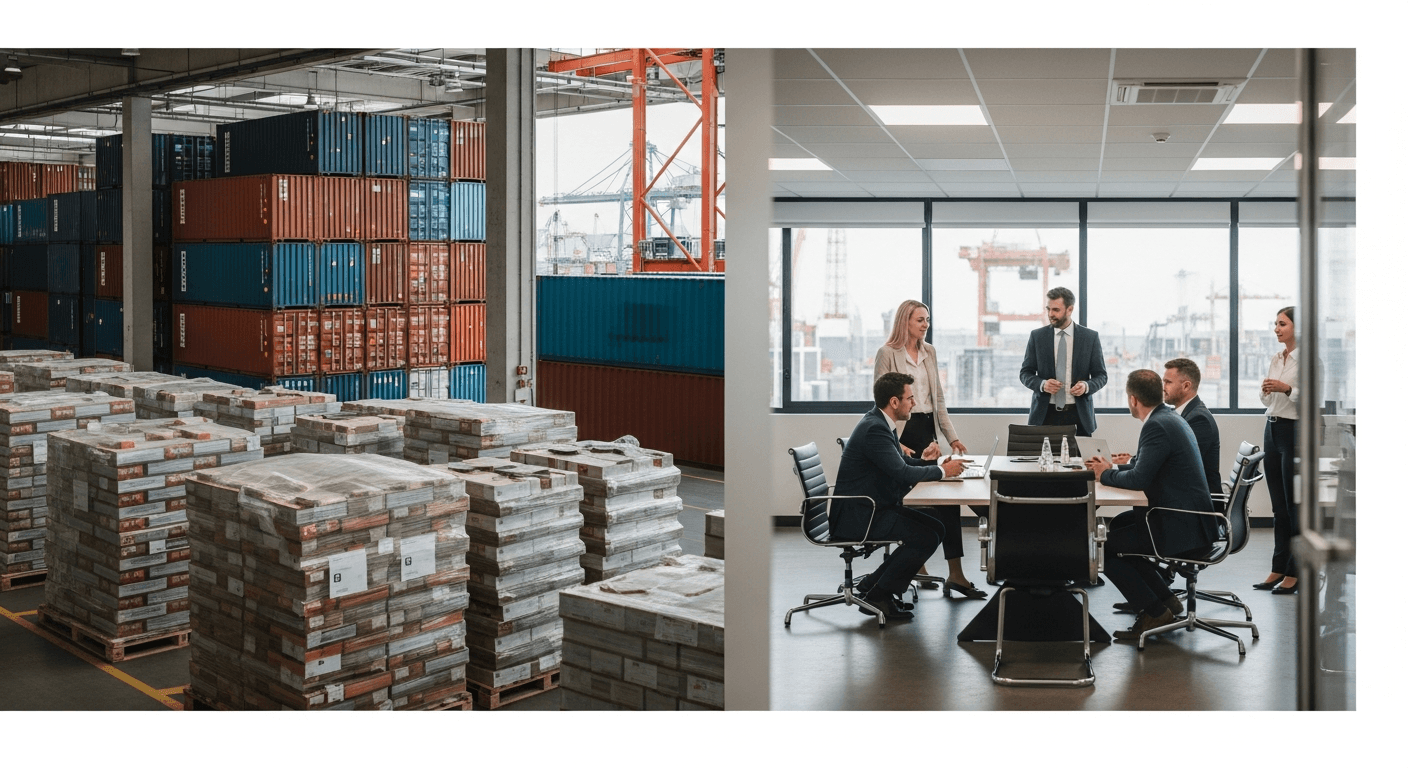
AI-Driven Account Targeting: How Manufacturers Find EU Buyers in 2026
AI account targeting helps manufacturers find EU buyers by continuously identifying import managers, purchasing directors, and category buyers who show active sourcing intent — delivering 40-120 qualified meetings a year for €2,000-8,000, compared with 5-15 meetings from a single €15,000-25,000 trade fair. While your competitors queue for expensive trade fair booths, artificial intelligence is quietly revolutionising how European manufacturers connect with foreign buyers. In 2025, 17% of EU manufacturers used AI, which is two and a half times as many as in 2023. For manufacturers seeking import managers, purchasing directors, and category buyers across UK, DACH, and Nordic markets, AI-driven account targeting represents a fundamental shift from hoping buyers will visit your trade fair stand to proactively identifying and reaching qualified decision-makers year-round.
This comprehensive guide reveals how forward-thinking manufacturers are leveraging artificial intelligence to transform their export strategies, reduce customer acquisition costs, and secure meetings with the right buyers at a fraction of traditional trade fair expenses.
The AI Revolution in Manufacturing Export Sales
2026 marks a pivotal moment for European manufacturing. Artificial intelligence has evolved from experimental technology to an essential competitive advantage. The European artificial intelligence market is worth around $66 billion, with an expected annual growth rate of over 30% through 2030. In the manufacturing sector alone, the 'AI in Manufacturing' segment is expected to grow between 30% and 40% per year.
What's driving this transformation? Traditional export methods are becoming increasingly expensive and inefficient. A single trade fair can cost 15,000-25,000 EUR for three days, with no guarantee of meeting qualified buyers. Meanwhile, AI-powered account targeting enables manufacturers to identify and connect with specific decision-makers continuously throughout the year.
📊 72% of European manufacturers feel positive about the potential of AI, and 66% believe it will be important or decisive for competitiveness over the next three years (Source: ECI Software Solutions Manufacturing Trends Report 2026)
How AI Transforms Account Targeting for Manufacturers
AI-driven account targeting fundamentally changes how manufacturers approach international expansion. Instead of casting wide nets at trade fairs, artificial intelligence enables precise identification of companies actively seeking your products.
Intelligent Buyer Identification
Traditional methods rely on generic industry databases or trade fair attendee lists. AI systems analyse multiple data sources simultaneously: company financials, recent hiring patterns, import/export records, and digital behaviour signals. This creates detailed profiles of potential buyers most likely to engage.
For example, an AI system might identify that a UK retail chain recently hired a new category manager for confectionery, increased their import budget by 30%, and visited competitors' websites. This combination suggests active sourcing intent - exactly when you want to make contact.
Predictive Market Analysis
AI excels at spotting market trends before they become obvious. Predictive AI adoption among manufacturers rose 12 percentage points to 48% in 2026. Interest in AI for supply chain planning increased 19 points to 35%, and process optimization rose 11 points to 36%.
This predictive capability helps manufacturers enter markets at optimal timing. Rather than guessing when German distributors might need new suppliers, AI identifies specific companies showing expansion signals.
💡 Key Insight: AI doesn't replace human expertise in manufacturing sales - it amplifies it. The most successful implementations combine AI's data processing power with human relationship-building skills.
The Reality of AI Adoption Across European Manufacturing
While AI adoption is accelerating, significant gaps remain between ambition and implementation. Understanding these patterns helps manufacturers benchmark their own digital transformation efforts.
Regional Adoption Patterns
Larger manufacturing companies (250+ employees) use AI three times as often (64%) as smaller companies (10-50 employees, 21%). This creates opportunities for mid-size manufacturers (50-500 employees) who can move faster than large corporations while having more resources than small companies.
Belgium and Denmark lead European AI adoption in manufacturing, while traditional industries like textiles and food processing lag behind. However, this gap represents opportunity - early adopters in traditional sectors often see the greatest competitive advantages.
Industry-Specific Applications
Different manufacturing sectors apply AI account targeting in unique ways:
- Food & Beverage: AI identifies retailers expanding organic ranges or seeking specific certifications
- Cosmetics & Beauty: Systems track beauty brands launching in new markets or seeking contract manufacturers
- Apparel & Accessories: AI spots fashion retailers adjusting sourcing strategies or seasonal buying patterns
- Confectionery & Snacks: Algorithms identify distributors expanding product portfolios or entering new channels
AI-Powered Export Sales Workflows
Successful AI implementation requires structured workflows that combine artificial intelligence capabilities with proven export sales processes.
Stage 1: Market Intelligence Gathering
AI systems continuously monitor target markets for relevant signals:
- New company registrations in target industries
- Changes in import/export patterns
- Personnel movements at potential buyer companies
- Industry news and expansion announcements
- Competitor activities and market positioning
This intelligence gathering happens 24/7, providing manufacturers with real-time market insights that would be impossible to gather manually.
Stage 2: Account Scoring and Prioritisation
Not all potential buyers deserve equal attention. AI scoring models evaluate prospects based on:
- Company size and growth trajectory
- Historical purchasing patterns
- Geographic expansion plans
- Financial stability indicators
- Competitive landscape positioning
This scoring enables export teams to focus on accounts with highest conversion probability.
Stage 3: Personalised Messages
AI takes personalisation beyond simple mail merge. Systems analyse individual decision-makers' backgrounds, recent company developments, and industry challenges to craft relevant messaging.
For instance, when contacting a purchasing director at a German retail chain, AI might reference their recent store expansion, specific product categories they're developing, and relevant industry trends affecting their business.
⚡ Pro Tip: The most effective AI-driven programmes combine automated research and personalisation with human review and approval. This ensures messages remain authentic while benefiting from AI efficiency.
Measuring Success: AI Account Targeting vs Traditional Methods
Manufacturers implementing AI-driven account targeting report significant improvements across key metrics:
| Metric | Traditional Trade Fairs | AI Account Targeting |
|---|---|---|
| Annual Cost | €15,000-25,000 per event | €2,000-8,000 continuous |
| Qualified Meetings | 5-15 per event | 40-120 per year |
| Geographic Reach | Event location only | Multiple markets simultaneously |
| Timing Control | Fixed event dates | Year-round flexibility |
| Follow-up Quality | Manual, often delayed | Automated, immediate |
In a March 2025 survey, 90% of firms currently using AI reported tangible benefits in trade-related activities, and 56% reported that AI enhanced their ability to manage trade risks.
Overcoming Implementation Challenges
While AI offers significant advantages, manufacturers face real challenges when implementing these systems.
Data Quality and Integration
AI systems require high-quality data to function effectively. Many manufacturers struggle with:
- Inconsistent customer data across systems
- Limited integration between CRM and production systems
- Incomplete market intelligence databases
- Legacy systems that don't support modern AI tools
Solution: Start with data audit and cleansing before implementing AI tools. Focus on one market or product category initially to prove concept before expanding.
Skills and Training Requirements
Export teams need new skills to work effectively with AI systems. This includes understanding AI outputs, interpreting data insights, and maintaining human oversight of automated processes.
Solution: Invest in training programmes that combine AI tool usage with advanced export sales techniques. Partner with AI service providers who offer ongoing support and training.
Cost-Benefit Analysis
While AI implementation costs have decreased significantly, manufacturers must carefully evaluate ROI expectations.
📊 AI is expected to significantly boost global trade by 34-37% between 2025 and 2040 (Source: World Trade Organization 2025 World Trade Report)
Future-Proofing Your Export Strategy
As AI technology continues advancing rapidly, manufacturers must consider long-term strategic implications.
Emerging Technologies
Several AI developments will further transform manufacturing export sales:
- Natural Language Processing: Improved multilingual communication with international buyers
- Computer Vision: Automated product matching and quality assessment
- Predictive Analytics: More accurate demand forecasting across markets
- Voice AI: Enhanced customer service and support capabilities
Competitive Considerations
Early AI adoption provides temporary competitive advantages, but these benefits diminish as technology becomes widespread. Manufacturers should focus on:
- Building proprietary data assets
- Developing unique AI applications for their specific markets
- Creating integrated systems that combine AI with human expertise
- Establishing long-term partnerships with technology providers
Integration with Existing Export Activities
AI account targeting works best as complement to, not replacement for, traditional export activities. Smart manufacturers use AI to:
- Identify which trade fairs offer best ROI
- Prepare more effectively for international meetings
- Follow up systematically after events
- Maintain relationships between face-to-face interactions
Key Takeaways
- AI-driven account targeting enables manufacturers to identify qualified buyers continuously rather than relying on periodic trade fair encounters
- European manufacturers using AI report 90% success rates in achieving tangible trade-related benefits, with 56% seeing improved risk management capabilities
- Mid-size manufacturers (50-500 employees) have optimal positioning to implement AI systems faster than large corporations while having more resources than small companies
- Successful AI implementation combines automated research and personalisation with human relationship-building skills and market expertise
- AI account targeting costs 70-85% less than traditional trade fair participation while delivering 3-8 times more qualified meetings annually
- Data quality and team training represent the biggest implementation challenges, requiring systematic approaches to data cleansing and skills development
- Future competitive advantage will come from building proprietary data assets and creating integrated systems rather than simply adopting standard AI tools
Conclusion
AI-driven account targeting represents the most significant advancement in manufacturing export sales since the internet transformed business communications. While 72% of European manufacturers recognise AI's importance for future competitiveness, many remain in early implementation stages.
The manufacturers who will dominate international markets over the next decade are those who master AI account targeting today. By combining artificial intelligence capabilities with proven export expertise, these companies create sustainable competitive advantages that compound over time.
If you're a manufacturer looking to find foreign buyers without spending 15,000 EUR on trade fairs, ProspectX can help. We deliver ready-made meetings with import managers, purchasing directors, and distributors in your target markets. Book a call to discuss your export goals.