Anuga Alternative: Find EU Food Distributors Year-Round
In short
Discover how food manufacturers can find European distributors year-round without expensive Anuga booths. Cost-effective strategies that deliver meetings with buyers.
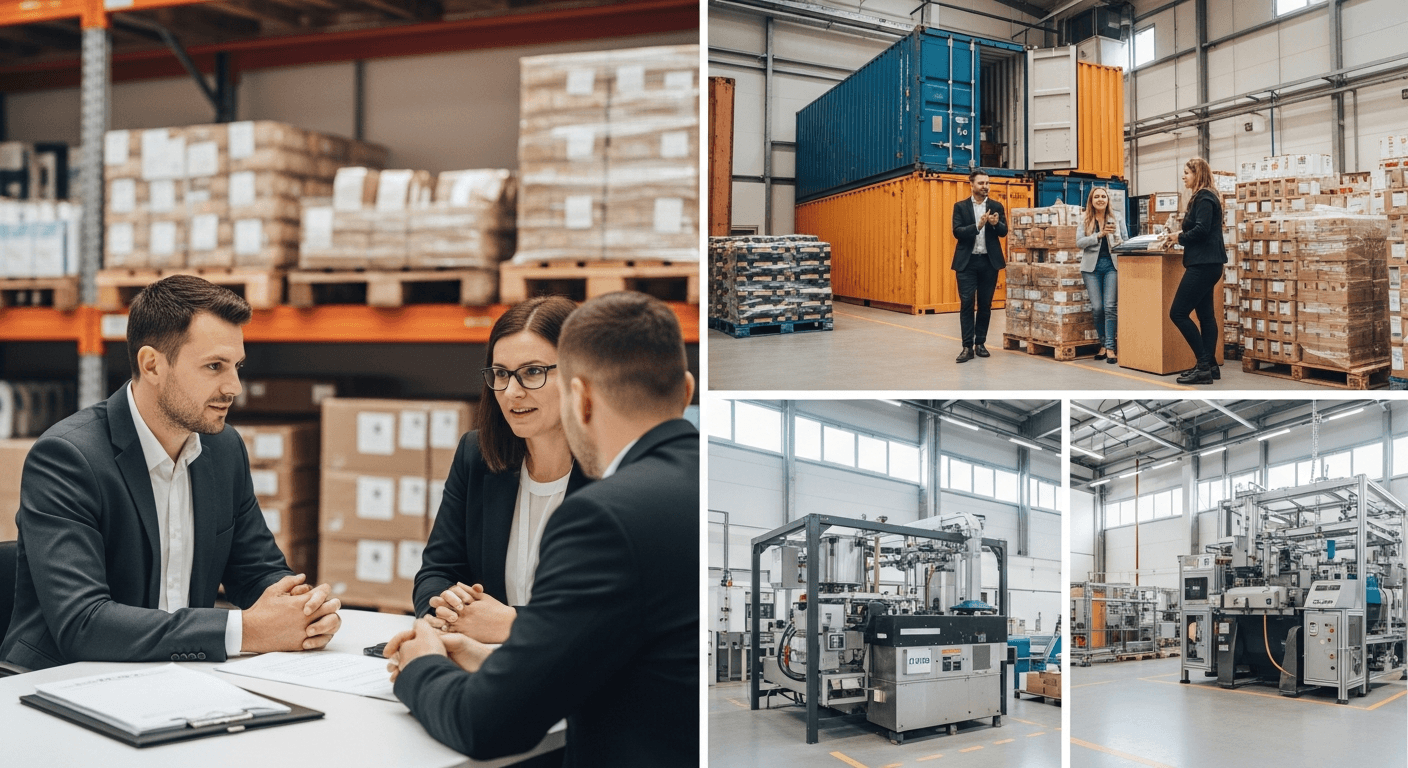
Anuga Alternative: How Food Manufacturers Secure Distributors Year-Round Without a 20,000 EUR Booth
The best Anuga alternative for food manufacturers is systematic, year-round contact with distributor decision-makers: on a fixed fee over 12 months it typically generates 40-60 qualified meetings with import managers and purchasing directors, versus 8-12 rushed meetings from a €25,000+ premium booth. Anuga 2023 welcomed over 170,000 visitors, yet most food manufacturers left with a handful of business cards and a hefty bill. Trade fairs account for only 15-20% of how European distributors discover new suppliers, according to recent industry research — the remaining 80% happens through direct contact, referrals, and year-round relationship building.
For food manufacturers in Poland, Czech Republic, and other CEE countries looking to break into Western European markets, the traditional trade fair approach is becoming increasingly expensive and inefficient. A premium Anuga booth can cost upwards of 20,000 EUR for just three days, with no guarantee of meaningful connections with decision-makers.
This article reveals how forward-thinking food manufacturers are securing distributors in the UK, DACH, and Nordic markets through systematic, year-round approaches that cost a fraction of major trade fair participation whilst delivering consistent meetings with import managers and purchasing directors.
The Hidden Costs of Relying Solely on Trade Fairs Like Anuga
Beyond the Booth: The True Anuga Cost
Whilst Anuga booth prices start at around 15,000 EUR for a modest 18m² space, the real investment extends far beyond the exhibition fee. Travel costs, accommodation for your team, promotional materials, product samples, and staff time easily push the total investment above 25,000 EUR for a meaningful presence.
📊 Only 23% of trade fair attendees are actual decision-makers with purchasing authority, meaning most conversations happen with junior staff or consultants.
The mathematics become even less attractive when you consider the limited timeframe. Three days at Anuga translate to roughly 72 hours of potential networking, during which your team must compete with 7,500+ other exhibitors for the attention of qualified buyers.
The Seasonal Limitation Problem
Trade fairs operate on rigid schedules. Anuga occurs every two years, whilst smaller regional food fairs typically run annually. This creates significant gaps in your export development activities. A Polish dairy manufacturer targeting German retail chains cannot afford to wait 12-24 months between meaningful buyer engagement opportunities.
Meanwhile, purchasing directors at major European food distributors make sourcing decisions throughout the year. German food imports grew by 8.2% in 2023, indicating continuous demand for new suppliers across all quarters, not just during trade fair seasons.
How European Food Distributors Actually Find New Suppliers
The Reality of Distributor Sourcing Behaviour
Recent research reveals a fundamental shift in how European food distributors identify potential suppliers. Over 60% of purchasing decisions now begin with a supplier making direct contact, or with a referral, rather than a trade fair encounter.
Import managers at major UK and German food distributors receive dozens of supplier inquiries weekly. Those who present clear value propositions, relevant certifications, and understand local market requirements often secure meetings within weeks, not months.
💡 Key Insight: Category managers at European retail chains typically evaluate new suppliers on a rolling basis, with formal reviews occurring quarterly rather than annually.
What Purchasing Directors Actually Want
At ProspectX, we've analysed hundreds of successful manufacturer-distributor connections across DACH and Nordic markets. The most effective approaches share common elements:
- Clear category positioning: "We manufacture premium organic breakfast cereals" rather than "We're a food company"
- Relevant certifications upfront: BRC, IFS, organic, or specific retailer standards
- Market-specific packaging: Understanding of local labelling requirements and portion preferences
- Competitive pricing structure: Transparent wholesale pricing that allows for distributor margins
Year-Round Strategies That Outperform Trade Fair ROI
Contacting Decision-Makers Directly
The most successful food manufacturers we work with have moved beyond hoping for chance encounters at crowded trade fair booths. Instead, they systematically identify and approach specific decision-makers at target distributors.
A structured approach typically involves:
- Market research phase: Identifying active food distributors in your target categories and regions
- Decision-maker identification: Finding the specific import managers or category buyers responsible for your product types
- Value proposition development: Crafting messages that address local market needs and distributor pain points
- Systematic engagement: Regular, professional contact that builds relationships over time
⚡ Pro Tip: When contacting German purchasing directors, always include your IFS certification number and specify which retail standards you currently meet in your initial communication.
Building Relationships Through Consistent Communication
Unlike trade fairs, which offer brief, high-pressure interactions, year-round relationship building allows for deeper engagement. Import managers appreciate suppliers who understand their market challenges and can provide ongoing support.
Casper Morawski, founder of ProspectX, observes: "The manufacturers who succeed in Western European markets are those who view distributor relationships as partnerships, not transactions. This requires consistent communication and genuine market insight, not just a flashy trade fair booth."
Leveraging Digital Channels for Market Entry
Digital channels now influence 78% of B2B purchasing decisions in the food industry. Smart manufacturers complement direct contact with a strategic digital presence:
- LinkedIn engagement: Connecting with and engaging purchasing directors through valuable content
- Industry publication visibility: Contributing insights to trade publications read by your target buyers
- Webinar participation: Sharing expertise in formats that busy import managers can consume flexibly
Cost Comparison: Trade Fairs vs Year-Round Approach
| Approach | Initial Investment | Duration | Decision-Maker Meetings | Cost Per Meeting |
|---|---|---|---|---|
| Anuga Premium Booth | €25,000+ | 3 days | 8-12 qualified meetings | €2,500+ |
| Year-Round Buyer Contact | Fixed fee | 12 months | 40-60 meetings | Far lower |
| Hybrid Approach | Booth + fixed fee | 12 months | 60-80 meetings | Lower |
📊 Response rates for direct, well-researched contact with food industry decision-makers average 12-15%, significantly higher than the 2-3% conversion rate typical at major trade fairs.
The Mathematics of Consistent Engagement
Consider a Polish organic food manufacturer selling to UK distributors. A systematic 12-month contact programme might generate:
- Month 1-2: Initial market research and decision-maker identification
- Month 3-6: First wave of contact generating 15-20 meetings with import managers
- Month 7-9: Follow-up sequences and relationship nurturing
- Month 10-12: Second wave of contact plus ongoing relationship management
This approach typically yields 40-60 meaningful conversations with qualified decision-makers, compared to 8-12 rushed meetings at a major trade fair.
Targeting Specific European Markets Without Trade Fair Dependence
DACH Region: Germany, Austria, Switzerland
The DACH region represents Europe's largest food import market, with Germany alone importing over €85 billion worth of food products annually. However, German purchasing directors are notoriously detail-oriented and prefer suppliers who demonstrate thorough market understanding.
Successful market entry typically requires:
- Certification compliance: IFS, BRC, and often specific retailer standards
- Packaging adaptation: German consumers prefer specific portion sizes and clear ingredient listings
- Supply chain reliability: Ability to maintain consistent delivery schedules
- Technical documentation: Comprehensive product specifications and quality assurance data
Nordic Markets: Sweden, Denmark, Norway, Finland
Nordic food markets offer premium positioning opportunities for quality-focused manufacturers. Swedish food imports increased by 11% in 2023, driven largely by consumer demand for organic and sustainable products.
Key success factors include:
- Sustainability credentials: Environmental impact documentation and sustainable packaging
- Premium positioning: Nordic consumers pay premium prices for quality and authenticity
- Seasonal adaptation: Understanding of Nordic seasonal consumption patterns
- Local language support: Basic product information in local languages
UK Market: Post-Brexit Opportunities
Despite Brexit complexities, the UK remains a significant opportunity for CEE food manufacturers. UK food imports from EU countries outside the traditional big four (Germany, France, Italy, Spain) grew by 15% in 2023.
Critical requirements:
- UKCA marking: Understanding of UK-specific regulatory requirements
- Customs documentation: Proper preparation for post-Brexit import procedures
- Local distribution: Partnerships with UK-based logistics providers
- Retailer relationships: Understanding of major UK retail chain requirements
Real-World Success: How Manufacturers Are Winning Without Anuga
Case Study: Polish Confectionery Manufacturer
A mid-sized Polish confectionery manufacturer selling to German retail chains implemented a systematic approach to contacting buyers in early 2023. Rather than waiting for Anuga 2024, they:
- Identified 150 German food distributors specialising in confectionery
- Researched specific category managers and purchasing directors
- Developed German-language materials highlighting their organic certifications
- Contacted buyers systematically over 12 weeks
Results: 18 meetings with qualified decision-makers, including category buyers from three major German retail chains. Total investment: a single fixed fee. Two distribution agreements signed within six months.
The ProspectX Approach: Trade Fair Alternative in Action
At ProspectX, we've refined this approach specifically for manufacturers seeking European distributors. Our typical pilot programme delivers:
- 8-12 weeks duration: Faster results than waiting for annual trade fairs
- 10 guaranteed meetings: With verified decision-makers, not junior staff
- €2,000 investment: Fraction of major trade fair booth costs
- Year-round flexibility: Can be launched any time, not tied to fair schedules
From our experience working with CEE manufacturers, the most successful programmes focus on specific buyer personas: import managers at food distributors, category buyers at retail chains, and purchasing directors at wholesale companies.
💡 Key Insight: Manufacturers who combine systematic buyer contact with selective trade fair participation see 300% better ROI than those relying solely on traditional exhibition strategies.
Building Your Year-Round Distributor Acquisition System
Phase 1: Market Intelligence and Target Identification
Before contacting anyone, successful manufacturers invest time in understanding their chosen markets. This involves:
- Distributor mapping: Identifying active food distributors in your target categories
- Decision-maker research: Finding specific import managers and purchasing directors
- Competitive analysis: Understanding current supplier relationships and market gaps
- Regulatory research: Ensuring compliance with local food import requirements
Phase 2: Value Proposition Development
European purchasing directors receive hundreds of supplier inquiries monthly. Your approach must immediately communicate clear value:
- Category-specific benefits: How your products solve specific retailer or consumer problems
- Competitive advantages: What differentiates you from existing suppliers
- Market readiness: Evidence of understanding local requirements and standards
- Partnership potential: How you'll support distributor success beyond just supplying products
Phase 3: Systematic Engagement and Relationship Building
Successful manufacturer-distributor relationships develop over time through consistent, valuable interactions:
- Initial contact: Professional introduction with clear value proposition
- Follow-up sequence: Regular communication providing market insights and product updates
- Meeting facilitation: Video calls or in-person meetings to discuss partnership opportunities
- Ongoing relationship management: Continuous support and communication
⚡ Pro Tip: Category managers appreciate suppliers who share market intelligence and consumer trends, not just product specifications. Position yourself as a market partner, not just a vendor.
Measuring Success: KPIs That Matter for Food Manufacturers
Beyond Booth Visitors: Metrics That Drive Growth
Trade fair success is often measured by booth visitors or business cards collected. However, meaningful export growth requires different metrics:
- Decision-maker meetings: Conversations with actual purchasing authority
- Follow-up engagement: Continued interest after initial contact
- Sample requests: Concrete interest in product evaluation
- Distribution agreements: Actual partnerships formed
- Revenue generation: Sales results from new market relationships
Timeline Expectations for European Market Entry
Based on our experience with food manufacturers entering Western European markets:
- Weeks 1-4: Market research and preparation for first contact
- Weeks 5-12: Active buyer contact and meeting generation
- Weeks 13-24: Relationship development and negotiation
- Weeks 25-36: Contract finalisation and market entry preparation
- Month 12+: Ongoing relationship management and market expansion
📊 Successful food export relationships typically require 6-9 months from initial contact to first commercial orders, regardless of whether the first connection occurred at a trade fair or through direct contact.
Common Mistakes Food Manufacturers Make (And How to Avoid Them)
Mistake 1: Generic Messaging
Many manufacturers use identical messaging across all European markets. German purchasing directors have different priorities than Swedish import managers. Success requires market-specific value propositions.
Mistake 2: Focusing on Features, Not Benefits
Distributors don't buy products; they buy solutions to their customers' problems. Instead of listing product specifications, focus on how your products help distributors succeed in their markets.
Mistake 3: Inconsistent Follow-Up
European business culture values persistence and professionalism. A single email rarely generates response. Successful manufacturers maintain consistent, valuable communication over months.
Mistake 4: Ignoring Local Requirements
Each European market has specific regulatory, packaging, and consumer preference requirements. Manufacturers who demonstrate understanding of these nuances significantly outperform those who don't.
Key Takeaways
- Trade fairs like Anuga represent only 15-20% of how European distributors discover new suppliers, making year-round buyer contact essential for consistent growth
- Contacting decision-makers directly costs 90% less than premium trade fair booths whilst generating 3-5 times more qualified meetings with purchasing directors
- European food distributors make sourcing decisions throughout the year, not just during trade fair seasons, creating continuous opportunities for prepared manufacturers
- Successful market entry requires market-specific value propositions that address local regulatory requirements, consumer preferences, and distributor challenges
- Systematic relationship building over 6-12 months typically yields better results than sporadic trade fair participation every 1-2 years
- The most effective approach combines focused buyer contact with selective trade fair participation, rather than relying exclusively on either strategy
- Manufacturers who position themselves as market partners rather than product vendors achieve significantly higher success rates in securing European distribution agreements
Conclusion
Whilst Anuga and similar trade fairs remain valuable for industry networking and trend spotting, they're no longer sufficient for systematic European market expansion. Food manufacturers who combine strategic buyer contact with selective trade fair participation consistently outperform those relying solely on expensive booth investments.
The mathematics are compelling: a year-round approach costs less, generates more qualified meetings, and builds stronger relationships than traditional trade fair dependence. More importantly, it provides the consistent market engagement necessary for sustainable export growth.
For CEE food manufacturers serious about Western European expansion, the question isn't whether to abandon trade fairs entirely, but how to build comprehensive market entry strategies that work year-round, not just during exhibition seasons.
If you're a food manufacturer looking to find European distributors without spending 20,000 EUR on trade fair booths, ProspectX can help. We deliver ready-made meetings with import managers, purchasing directors, and distributors in your target markets. Book a call to discuss your export goals and discover how our anuga alternative approach can accelerate your European market entry.